We're here to you get a better night's sleep for academic and personal success.
Most college students need 7–9 hours of sleep each night to support
- Intellectual wellness
- Physical wellness
- Emotional wellness
If you’re experiencing persistent or severe sleep problems that are impacting your day-to-day functioning, we’re here to help.
Wellness Coaching
Our wellness coach will work with you to understand your current sleep habits and collaborate on a personalized plan to help you achieve more consistent, high-quality sleep.
Medical Care
Our clinicians can help you identify the possible medical cause of your sleep disturbance and discuss treatment options.
How Sleep Affects Your Brain
Sleep Improves
- Academic performance
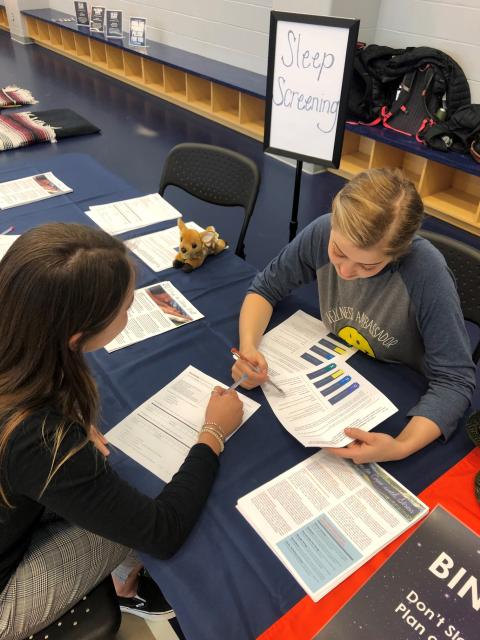
Well-Being Interns provide free sleep screenings to their peers
- Other performances (i.e., athletic, artistic, public speaking)
- Memory and concentration
- Mood regulation and emotional wellness
- Immune system functioning
- Physical health
Disrupted Sleep Can Be Normal
- Your sleep quality is a reflection of what is happening in your waking hours. If you're experiencing stress or adjusting to a new environment, it's natural to have disrupted sleep.
- It's important to understand your sleep cycle.
- In a single night, you'll cycle through the sleep stages four to five times.
- Each cycle last 90 minutes.
- As the night progresses, you'll spend less time in deep sleep.
- Due to the cyclic nature of sleep, you will have periods of lighter sleep interspersed with deeper sleep.
Strategies to Sleep Well at Night
- Establish a regular sleep schedule by going to bed and waking up at the same time each day, even on weekends
- Cope with stress instead of avoiding it so that your mind can be at ease to sleep. You can use a stress mindset to ask yourself what you're stressed about, what's at stake, and what coping strategies would be helpful.
- Avoid or limit stimulants use such as caffeine, nicotine, alcohol and cannabis which can disrupt sleep.
- Create a relaxing bedtime routine by winding down before bed doing things your find relaxing.
- Optimize your sleep environment by ensuring it's dark, quiet, and cool. Consider using an eye mask, earplugs, or fan.
- Dim your screen and limit screen time before bed to signal to your brain that it's nighttime and time to sleep.
- Go to bed when you're sleepy will help your body associate your bed with sleep. Going to bed simply because you think you should makes it harder to fall asleep.
Strategies If You're Tired During the Day
- Take study breaks. Your brain needs both stimulation and rest to function optimally.
- Take a 20-minute power nap to boost energy and cognitive functioning. Science shows a power nap is more effective than caffeine.
- Enjoy a longer nap if you more rest. A 90-minute nap will complete a full sleep cycle and prevent waking-up groggy. Avoid napping late in the day if you have trouble sleeping at night.
- Relax your body and mind. Lie down quietly for 5-20 minute, free from distractions like electronics or noise. This brief respite can help calm your nervous system, leading to improved emotional, cognitive, and physical wellness.
- Move your body. Body movement will increase energy and focus.
- Check in with your emotional wellness. Difficult emotions and stress that is avoided can lead to sleep disturbances that make it difficult to fall asleep, stay asleep, and create daytime sleepiness. Caring for your emotional wellness will help you sleep better.
