
The Mood Meter for Emotional Regulation
Emotional wellness is experiencing a range of emotions and being able to move through them to come into a state of regulation. Being with emotions and responding to them skillfully, enhances many areas of the wellness on the UNH Well-Being Wheel:
- Social wellness to feel more socially connected and less isolated
- Intellectual wellness to make decisions with confidence and clarity
- Physical wellness to make decisions that support and sustain your physical health and energy while giving your body time for restoration and healing
- Spiritual wellness to have a larger perspective on life, live your values, and increase feelings of gratitude and optimism
Label How You Feel
The Mood Meter, developed by the Yale Center for Emotional Intelligence and used at UNH, is a simple tool that helps you build your emotional vocabulary and become more skilled at identifying what you're feeling.
The Mood Meter helps you explore a wide range of emotions and develop the awareness needed to move through life's inevitable ups and downs with flexibility and self-compassion.
There is a free companion app to The Mood Meter called How We Feel.
Knowing how you feel enhances emotional wellness
Accurately naming how you feel is an important part of emotional wellness. This skill is called affect labeling, the practice of putting feelings into words. Naming emotions can help reduce their intensity and make them easier to understand and navigate.
When you know how you feel, you're better able to:
- Increase self-awareness
- Understand what you're experiencing
- Respond to challenges with greater clarity
- Take care of yourself with compassion and intention
Emotions are data
Emotions are valuable sources of information. They provide clues that something important is happening in your life and often show up as temporary changes in your thoughts, energy level, body sensations, and behavior.
Myth of happiness
Being emotionally well doesn't mean feeling happy all the time, that is impossible. Emotional wellness means learning to recognize and accept your emotions as they arise, then responding and moving through with curiosity rather than judgment.
All moods happen in response to what is going in in your life. For example, it's natural to be sad when you've experienced loss and worried when something you care about is at risk.
Emotional wellness for social connection
Isolation can be very painful and hinder well-being. When you name and share your feelings, you create opportunities for deeper connection, trust, and authenticity. Expressing your emotions helps others better understand what you're experiencing, making it easier for them to offer support, empathy, and encouragement. By communicating openly about your feelings, you strengthen relationships and foster a greater sense of belonging.
How to use The Mood Meter
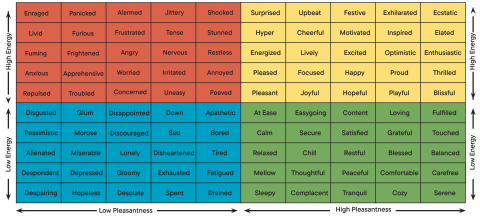
The Mood Meter
Instructions:
- Take pauses throughout the day to identify how you are feeling.
- Notice the bodily sensations that accompany your mood.
- Use you mood as data to ask yourself, "what would be helpful."
- Listen and trust the answer.
- Repeat. Repeat. Repeat. Everytime you use The Mood Meter you strengthen the habit of emotional regulation, help you respond rather than react and supporting your overall emotional wellness and well-being.
You may notice that the simple act of pausing to check in with how you're feeling offers a feeling of relief.
BONUS
- Don't reserve check-ins difficult moments. Regularly noticing and appreciating pleasant moods is another powerful way to support your emotional wellness.
- Share how you're feeling with others to practice being vulnerable and boosting your social wellness.
- Share The Mood Meter with others in your life so they too can enhance their emotional wellness.
Understanding The Mood Meter
Let's walk-through The Mood Meter. It has four quadrants that represent various mood states and their associated levels of energy and pleasantness.
- Red - High energy, low pleasant moods
- Blue - Low energy, low pleasant moods
- Yellow - High energy, high pleasant moods
- Green - Low energy, high pleasant moods
Nowhere on The Mood Meter will you see the words, "good, bad, fine, okay" because those aren't emotional states.
Red Quadrant
This area of The Mood Meter is red because it represents where passion, worry, and anger live. Your body senses a threat or challenge and turns on your stress response to increase your energy and help you respond. While these emotions can be motivating, they can be exhausting if you stay here too long.
red moods
- Alarmed
- Angry
- Annoyed
- Anxious
- Apprehensive
- Concerned
- Enraged
- Frightened
- Frustrated
- Fuming
- Furious
- Irritated
- Jittery
- Livid
- Nervous
- Panicked
- Peeved
- Repulsed
- Restless
- Shocked
- Stunned
- Tense
- Troubled
- Uneasy
- Worried
Blue Quadrant
Blue moods
- Alarmed
- Alienated
- Apathetic
- Bored
- Depressed
- Desolate
- Despairing
- Disappointed
- Discouraged
- Disgusted
- Disheartened
- Down
- Drained
- Exhausted
- Fatigued
- Gloomy
- Glum
- Hopeless
- Lonely
- Miserable
- Morose
- Pessimistic
- Sad
- Spent
- Tired
Yellow Quadrant
Yellow Moods
- Cheerful
- Ecstatic
- Elated
- Energized
- Enthusiastic
- Excited
- Exhilarated
- Festive
- Focused
- Happy
- Hopeful
- Hyper
- Inspired
- Joyful
- Lovely
- Motivated
- Optimistic
- Playful
- Pleased
- Pleasant
- Proud
- Surprised
Green Quadrant
This area of The Mood Meter is green because it represents relaxation and ease. Your body and mind can settle into the present moment, knowing there is nothing that needs to be done or fixed. Give yourself permission to slow down, recover, and enjoy feelings of contentment. This time of rest is essential for healing.
Green moods
- Ease
- Balanced
- Blessed
- Calm
- Carefree
- Chill
- Complacent
- Comfortable
- Content
- Cozy
- Easygoing
- Fulfilled
- Grateful
- Loving
- Mellow
- Peaceful
- Relaxed
- Restful
- Satisfied
- Secure
- Serene
- Sleepy
- Thoughtful
- Touched
- Tranquil
Emotional Wellness at UNH
The Wellness Center's Services
Prevention & Education
- The UNH Well-Being Wheel
- Request an emotional wellness program for your classroom or community
- Faculty, request The Mood Meter for use in your classroom
- Take LAP520, our 2 credit wellness course
- Living Well Services
- Coping with Stress in College
- How Are Your Really? Mental Health Campaign
- How to Help a Friend
Individual Care
- Wellness Coaching
- Eating Concerns Counseling/Education
- Substance Use Counseling/Education
- Psychological & Counseling Services (PACS)
