Low-Cost Reflectance Transformation Imaging (RTI) for Art Institutions
Art is not only fascinating to the eye but also in the way it provides historical context and brings communities together. This concept, known as cultural heritage, allows people to connect to art, learn about their generational history, and learn more about other cultures. Currently, art funding in the U.S. is at an all-time low. This has caused a decrease in hiring, layoffs and lower budgets in museums and other public collections of art. Without staff, such as art conservators and provenance researchers, there is a lot of cultural heritage left on the table.
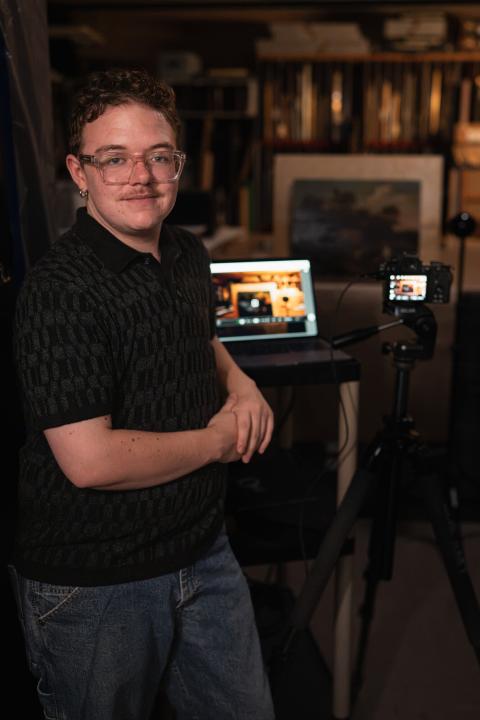
With a Summer Undergraduate Research Fellowship (SURF) from the Hamel Center for Undergraduate Research, I have been working to bring more of the cultural heritage of art to light without breaking the bank. Art collections such as the UNH Study Collection at Paul Creative Arts Center provide students opportunities to study Japanese woodblock prints and learn about feudal Japan economy or view oil paintings and learn how context of living in the Netherlands can change how someone experiences diversity. Using low-cost technical photography techniques can provide collections such as this with information about their pieces including (but not limited to): place of origin, previous restoration work, current condition, and possible repair needs. Being able to study pieces without handling them or having costly high-grade imaging allows collections to give the public more information about their pieces and better plan for the future of their artwork. My SURF research focused on creating a low-cost workflow for a type of technical photography called Reflectance Transformation Imaging (RTI). Through my research, I hope to bring the UNH Study collection to light and provide a framework for the RTI process that can be used by art collections everywhere.

Reflectance Transformation Imaging involves capturing a series of images with a stationary camera and a mobile handheld light. These images are then processed and uploaded to RTI building software which converts the image set into an interactive file. The file can be manipulated to show the piece of art at different light angles and in a high contrast version. By comparing this file to the piece and a regular photo of the piece art collections teams can track the condition of a piece, identify artistic techniques, and make the piece more accessible to people who cannot visit the collection.
While RTI has been around since 2001, it has been largely inaccessible due to cost of equipment, and lack of resources available. Within the past few years, more research and examples of the process have become available. My research focused on making an accessible resource for people who are unfamiliar with RTI or technical photography to use this process in their own institution. By making this resource, more institutions will be able to implement the RTI process and maintain their collection for years to come.
As the summer comes to a close, my research is wrapping up. The workflow is nearly completed and includes three separate examples of the RTI process using pieces from the UNH Art Study Collection. As soon as it is finished and is reviewed, it will become a free publicly available resource.
By investing in art research, we are preserving cultural identity and providing contextual information about history to the general public. My hope is that the framework I developed for this process can help collections better understand, manage, and store their artwork for generations to come.

