NOAA Center for Excellence
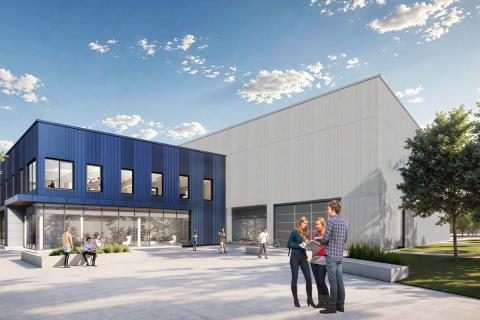
In 2023, NOAA awarded $20M to UNH to build an Ocean Mapping Center of Excellence facility that will provide 20,500 square feet of office, training, and high-bay space to:
- Operationalize technology developments in mapping platforms, sensors, and concepts-of-operations;
- Grow the pool of well-qualified talent in the field of ocean mapping through applied training for ocean mapping and hydrographic surveying operations,
- Provide technical support for ocean mapping technologies to operators in the field on an increasingly diverse set of platforms,
- Leverage public-private partnerships in advancing the nation’s ocean and Great Lakes mapping goals.
Williamson & Christensen
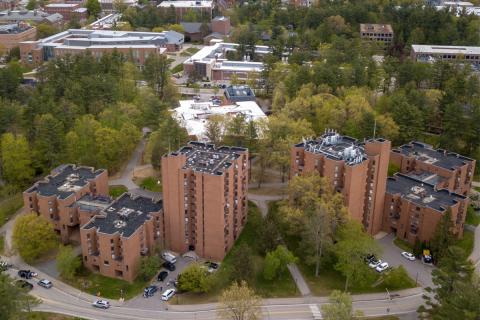
At 50 years old, the interiors are worn out from heavy use, bathrooms and common spaces need to be modernized, and heating and plumbing systems are failing.
These undergraduate student facing facilities are in poor condition making recruitment and retention challenging. With reinvestment, the facilities could be an asset that drives positive student experience and supports UNH as a first-choice destination.
This renovation project will address $32.3 million in deferred maintenance*. The scope of work has been developed strategically to allow alignment with available funding. The project aligns with the university’s long-term housing plan.
Morse Hall

Replace building wide HVAC equipment, to reduce operating costs and maintain humidity and temperature tolerances required for research grants.
Strategically improve thermal envelope including doors, window sealant, and skylight to reduce operating costs.
Modernize fume hoods for safety, functionality, and energy efficiency.
Phased project to allow for ongoing research.
Construction Management at risk project delivery method. Primary HVAC Systems are 38 years old with numerous ad-hoc components added over the years.
Laboratory spaces cannot maintain temperature and humidity tolerances required by grant terms putting research funding at risk. Fume hoods are original to the building, have limited controls and are in poor condition contributing to significant energy use.
Air infiltration at windows, doors and skylight are contributing to poor energy performance. A facility that creates a first impression that correlates with the cutting-edge innovation happening in the space will attract students and research
