
Dr. Sherry Hamby is a Distinguished Research Professor of Psychology at the University of the South in Tennessee. She is also the Director of the Life Paths Research Center and founder of ResilienceCon, a conference on strength-based approaches to overcoming trauma. She has spent over 30 years studying violence, trauma, and pathways to healing, drawing on her experiences as a therapist, community advocate, and survivor. Dr. Hamby has authored or coauthored over 200 scholarly articles and five books, with citations placing her in the top 2% among more than 10 million published scientists. Her awards include Outstanding Contributions to the Science of Trauma Psychology from the Trauma Psychology division of the American Psychological Association and the Christine Blasey Ford Woman of Courage Award from the Association of Women in Psychology. Her work has appeared in the New York Times, USA Today, Huffington Post, and numerous other media outlets. Check out her TEDx talk, Trauma is Everywhere But So Is Resilience. Her newest book is Stronger Than You Think: Building Lifelong Resilience (Penguin Life, May 2026).

I am the co-founder of several large national data collection efforts including the National Survey of Children Exposed to Violence (NatSCEV) and the National Incidence Study of Missing, Abducted, Runaway and Thrownaway CHildren (NISMART).
In my recent work, for example, my book, Child Victimization (Oxford University Press, 2008), I have tried to unify and integrate knowledge about all the diverse forms of child victimization in a field I have termed Developmental Victimology. This book received the Daniel Schneider Child Welfare Book of the Year award in 2009. Altogether, I am editor and author of 12 books and over 250 journal articles and book chapters.
I have received grants from the National Institute of Mental Health, the National Center on Child Abuse and Neglect, and the US Department of Justice, and a variety of other sources.
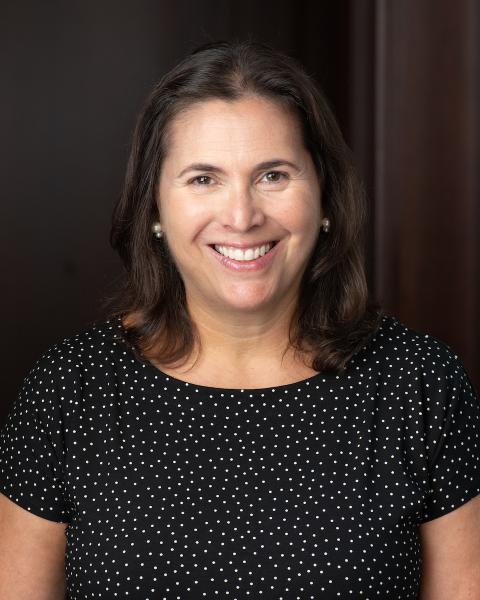
Leigh Goodmark (she/hers) is the Associate Dean for Research and Faculty Development and Marjorie Cook Professor of Law at the University of Maryland Francis King Carey School of Law, where she directs the Gender, Prison, and Trauma Clinic. She is the author of Imperfect Victims: Criminalized Survivors and the Promise of Abolition Feminism (University of California Press 2023); Decriminalizing Domestic Violence: A Balanced Policy Approach to Intimate Partner Violence (University of California Press 2018) and A Troubled Marriage: Domestic Violence and the Legal System (New York University 2012). She is the co-editor of The Criminalization of Violence Against Women: Comparative Perspectives (Oxford 2023) and Comparative Perspectives on Gender Violence: Lessons from Efforts Worldwide (Oxford 2015). Professor Goodmark’s work on intimate partner violence has appeared in numerous journals, law reviews, and publications, including Violence Against Women, the New York Times, the Harvard Civil Rights-Civil Liberties Law Review, the Harvard Journal on Gender and the Law, and the Yale Journal on Law and Feminism. From 2003 to 2014, Professor Goodmark was on the faculty at the University of Baltimore School of Law, where she served as Director of Clinical Education and Co-director of the Center on Applied Feminism. From 2000 to 2003, Professor Goodmark was the Director of the Children and Domestic Violence Project at the American Bar Association Center on Children and the Law. Before joining the Center on Children and the Law, Professor Goodmark represented clients in the District of Columbia in custody, visitation, child support, restraining order, and other civil matters. Professor Goodmark is a graduate of Yale University and Stanford Law School.

Jodi Quas, Ph.D., is Professor of Psychology at the University of California, Irvine. She is recognized across the globe for her work on children’s and adolescents’ memory, suggestibility, and abuse disclosure; and on the consequences of exposure to violence and legal involvement on youth. She has received numerous awards for her research, advocacy, and training, including She is dedicated not only to pursuing rigorous science but also to disseminating findings to policy makers, practitioners, and other professionals. To do so, she leads multidisciplinary teams and collaborates with law enforcement, legal professionals, educators, policy makers, and medical and social service professionals. Together, they provide much-needed evidence-based recommendations concerning how best to identify and intervene on behalf of youth exposed to harm and abuse and youth immersed in legal cases in juvenile, family, and criminal courts.

Dr. Chiara Sabina is Professor and the Chancellor’s Scholar for Inclusive Excellence for Interpersonal Violence at Rutgers University’s School of Social Work. She is currently the Associate Director for the Center for Research on Ending Violence. Dr. Sabina earned her doctorate in Applied Social Psychology from Loyola University Chicago with a certificate in Women’s Studies. Her research centers on interpersonal victimization, especially intimate partner violence, sexual violence, and dating violence among Latines. Dr. Sabina employs a contextual, intersectional, and strengths-based perspective with respect to interpersonal violence focusing on understudied groups, the influence of cultural variables, help-seeking responses, and examination of the service-delivery system. Dr. Sabina has received grants from the Fulbright Scholar Program, National Institute of Justice, Pennsylvania Commission on Crime and Delinquency, Vision of Hope, and National Sexual Violence Resource Center to conduct her work on Latine victimization, victim needs, violence prevention, domestic violence services, and culturally-informed services. Dr. Sabina is Co-Chair of the Research Advisory Board of Esperanza United and Fellow of the American Psychological Association.
