































The Lies We Tell
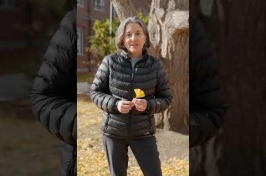
Stephen Pimpare, principal lecturer of American politics and public policy at UNH Manchester and faculty fellow at the Carsey School of Public Policy, discusses poverty in a recent interview with Frank News.

UNH Today is produced for the UNH community and for friends of UNH.
The stories are written by the staff of UNH Marketing.
Email us: unhtoday.editor@unh.edu.
Manage Your Subscription Contact Us

Stephen Pimpare, principal lecturer of American politics and public policy at UNH Manchester and faculty fellow at the Carsey School of Public Policy, discusses poverty in a recent interview with Frank News.
A researcher at the University of New Hampshire has received a USDA grant to develop new gene editing tools that could help scientists unravel how certain bacteria—which were previously understudied—promote growth in plants and protect them from environment stress. The tools are a critical step in better understanding the dynamics of bacteria-plant interactions that benefit plants and crops, and could advance global efforts to clean contaminated soils, reduce pollution, and tolerate salt in soil.
University of New Hampshire researchers have teamed up with colleagues from Pennsylvania State University to investigate whether a byproduct of the seafood industry could help manage one of the most devastating fruit diseases facing the U.S. apple industry.
Vine-ripened cantaloupe are delicious, yet few New Hampshire gardeners grow them. Come learn virtually about proven tips and solutions for growing great melons including how to select and prepare a growing site, varieties adapted to our area, when to start and transplant, how to accelerate the growth of your melons, how to manage pests and diseases, how to fertilize, and when to harvest.
Listeria has been found in two New Hampshire wild gray foxes by investigators at the New Hampshire Veterinary Diagnostic Laboratory at the University of New Hampshire. A zoonotic disease, the bacterium Listeria monocytogenes can sicken both people and farm animals. Some strains can be particularly important if they are resistant to multiple antibiotics and carry genes that lead to more severe diseases in infected people or animals
The University of New Hampshire community is mourning the passing of Dr. J. Brent Loy, University of New Hampshire professor emeritus and long-time NH Agricultural Experiment Station researcher. Loy, 79, died Friday, July 24, 2020, after being diagnosed four months ago with a rare sarcoma cancer.
Last week, the New Hampshire Agricultural Experiment Station celebrated National Estuaries Week. A number of our researchers conduct research on the Great Bay Estuary. Learn more below about their important research and how it is serving the state of New Hampshire.
Researchers with University of New Hampshire College of Life Sciences and Agriculture have received a near $2 million grant to help organic dairies remain profitable in the face of ongoing dairy market changes. Led by scientists with the New Hampshire Agricultural Experiment Station, the research will develop new science-based management techniques to boost productivity and economic efficiency and, in turn, support the continued supply of New England organic dairy products locally and regionally.
Scientists with the University of New Hampshire College of Life Sciences and Agriculture will lead research as part of a $1.5 million award from the National Science Foundation (NSF) to better understand how interactions between plants, microbes, and soil minerals in permafrost, a subsurface layer of frozen soil covering a fourth of the Northern Hemisphere, stimulate the release of carbon which adds to the warming Arctic.
Scientists with the New Hampshire Veterinary Diagnostic Laboratory at the University of New Hampshire have discovered a previously undiagnosed parasite and virus in the Canada Lynx. The parasite, transmitted by ticks, is a known to infect domestic dogs. The virus is similar to the Epstein-Barr virus that causes mononucleosis in humans and is related to a virus that infects domestic cats.