
Is the Master of Public Administration Degree Worth the Investment?
Chioma Agbahiwe had wanted her MPA for years. But life had other priorities. She was caring for her mother and raising two daughters while building a career in the nonprofit sector, working her way up to executive director.
When her daughters finished high school, she finally made the call.
"I always knew I wanted a Master's of Public Administration [degree]. Once my daughters finished high school, I was able to dedicate time to finding, joining, and completing a master's program."
She found Carsey's MPA at UNH — an online program she could complete while working full-time in Los Angeles — and enrolled. Today she is the Senior Program Manager of Outreach and Engagement for the California Jobs First Initiative at the LA County Economic Development Corporation, coordinating regional economic development planning across nearly 10 million residents. The skills she uses every day, she says, trace directly back to what she learned at Carsey.
This is her story.
Given your experience, what made you decide to earn your master's degree?
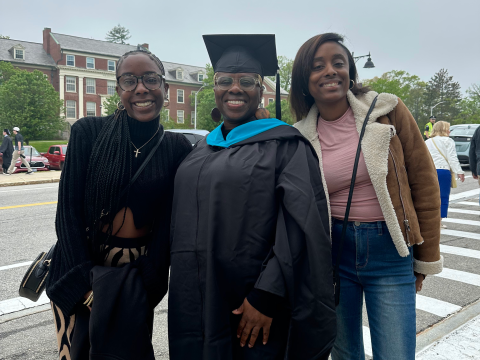
I've been an executive director in the past. For most of my professional career, I have worked at nonprofit organizations, but I always knew I wanted a Master's of Public Administration. I had wanted it for many years, but because I was a caregiver for my mother and raising two daughters, that came with time management challenges for me. So once my daughters finished high school, I was able to dedicate time to finding, joining, and completing a master's program.
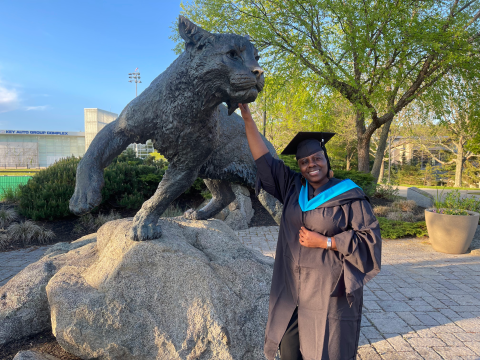
Part of me wanting to find and complete an MPA was because I do consider myself to be a forever learner. One thing I have learned working in the community for many years is that there is always more to learn, and that no one knows everything. I have been boots on the ground in grassroots community organizing, thinking of the systems-level solution that could exist for my community. But I knew there was more for me to learn — more theories, more strategies, more ways of developing frameworks, or even thinking about how to develop a framework and what a framework is.
What stood out about Carsey's MPA, especially from across the country in Los Angeles?
Carsey School stood out to me for a few reasons, but mainly because I'm on the West Coast and I wanted to be able to attend a school that may not necessarily be in person because of time management—working full-time, raising a family. I was very glad to find the Carsey School online. Also, I saw that I would be able to have access to my professors, even though the courses would be online. That was very important to me. I didn't just want to have asynchronous classes where I did the work and I never communicated with my professors, so I was very glad to see that I would still have some live meetings and that I would be able to have direct access to my professors.
What is the California Jobs First Initiative trying to accomplish, and where does your outreach and engagement work fit in?
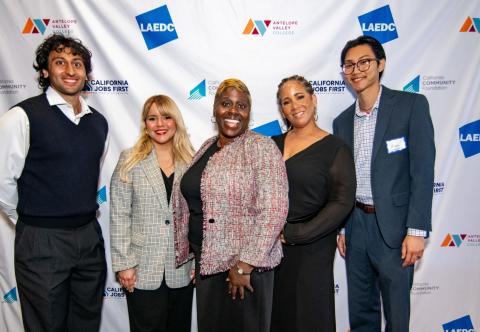
It's all about regional economic development planning. What that means is that each region is tasked with bringing community stakeholders and partners — which include government entities, labor unions, educational institutions, and community-based organizations — together to figure out how we can come up with plans and strategies specifically for each region within the state. Here in LA County, as Senior Program Manager of Outreach and Engagement, I've been tasked with bringing together the multitude of stakeholders in our region of almost 10 million residents, which spans almost 4,000 square miles, bringing all of these partners together to see how we can plan and then execute the plans.
When I think about who is greatly impacted by the work we're doing here with this initiative, I would have to say it is all of the almost 10 million residents of LA County, because the work we do is about bringing more jobs to the region in many different sectors. So the goal of this initiative is to really improve access to quality, good-paying jobs here in the region.
What does it take to bring marginalized voices to the table in a real way?
For one, it takes trust, and it takes strategic partnership. Building trust is important because you want to make sure that stakeholders understand the why — the why we're doing the work that we're doing. The trust-building factor consists of removing barriers and really listening — conducting in-person and online convenings and going into the many communities in LA County to have in-person meetings with stakeholders. So we had some of our community-based organizational partners conduct meetings where they helped convene maybe 30 or 50 people. One of my colleagues and I would go and present and share the information, the goals of the initiatives, and really listen ot the community — what their grievances were, what were the concerns they had for their regions, and how they wanted to provide feedback.
What does meaningful impact look like in your role?
The meaningful impact was that we were able to gather over 3,000 surveys, which really helped inform the data in our regional plans. For our region and all the other regions within the state, our plans were accepted by the federal government as comprehensive economic development plans. And so we are grateful for that. And that really shows the impact of the work that we did in gathering that data.
Is there a specific example of how your work has changed outcomes for the community?
Part of the work was funding our community stakeholders who helped us gather that data. Some of our community-based organizations are small, and many had never received a grant from an organization. Many of them were established on donations, and that's how they were funding their operations. They were happy to partner with us to work directly with the community — convening stakeholders who were residents in some of our disinvested communities within LA County. So the impact there was really helping our community-based organizations continue to do the work that they do.
How did the MPA change the way you think about your work?
"My frame of thinking has changed since completing the MPA program"
Since completing my MPA program, I view systems-level thinking differently. I think of everything in terms of frameworks and strategies. Instead of thinking of problems as siloed problems that need siloed solutions, I really think in terms of frameworks: what overall frameworks can I develop or strategize that will solve a problem? Starting globally or nationwide, then working my way down locally. So I think my frame of thinking has changed since completing the MPA program.
Was there a specific course or experience that connects directly to your work?
So many of the classes that I took stand out. One is really the Foundations of Public Administration — that just set the stage for me to have a better understanding of what public administration is. I mean, I've always worked in the nonprofit sector, but now I understand that our teachers and public sector administrators are all a part of public administration, and we all work together for the greater good of our society.
Also, Financial Management and Budgeting — that course was really instrumental for me. I definitely learned numerous Excel skills, strategies, and tips that I did not know existed before that class. And also my leadership classes — understanding leadership, understanding who I am as a leader, helps me now since I've completed the program.
When I was in the midst of learning about evaluation tools at work, I was also figuring out how to develop evaluation tools in the MPA program at the same time. So it was so helpful to learn in the Policy and Program Evaluation course the way to think about evaluating a program, while actually being involved in a program that needed evaluation tools. It was very beneficial for me and very helpful. The timing was perfect. And so I'm still using the tools and the knowledge that I learned in the Policy and Program Evaluation course when thinking about how to evaluate the California Jobs First initiative, specifically in my region.
What are the most practical skills you gained from the MPA?
Some of the practical skills that I'm able to continue to utilize from the MPA program include an understanding of stakeholder management — aligning stakeholders who come from different backgrounds and who need to align around a shared goal or initiative. That's still very helpful today given the work that I'm doing.
And also the financial management and budgeting knowledge that I learned. We all use Excel daily, so those skills are just practical skills that I'm grateful to have learned and that will continue to go with me wherever I go.
How did the MPA change your career?
The MPA program has really opened my eyes to what's available to me. The Foundations of Public Administration course really opened my eyes to what public administration even is. And so I'm still in the same role from when I began the program — it's been a little over a year since I finished. But just having an understanding of the scope of what's available to me is really eye-opening. And really, what the MPA program does — having the degree — lends to my credibility. So now, in addition to my years of experience in the nonprofit sector, I also have the MPA. So I have some more credibility to add to that experience. I see that as all beneficial in working for the greater good of my current role and any future role that I may have.
What's the most tangible return you've seen from your degree?
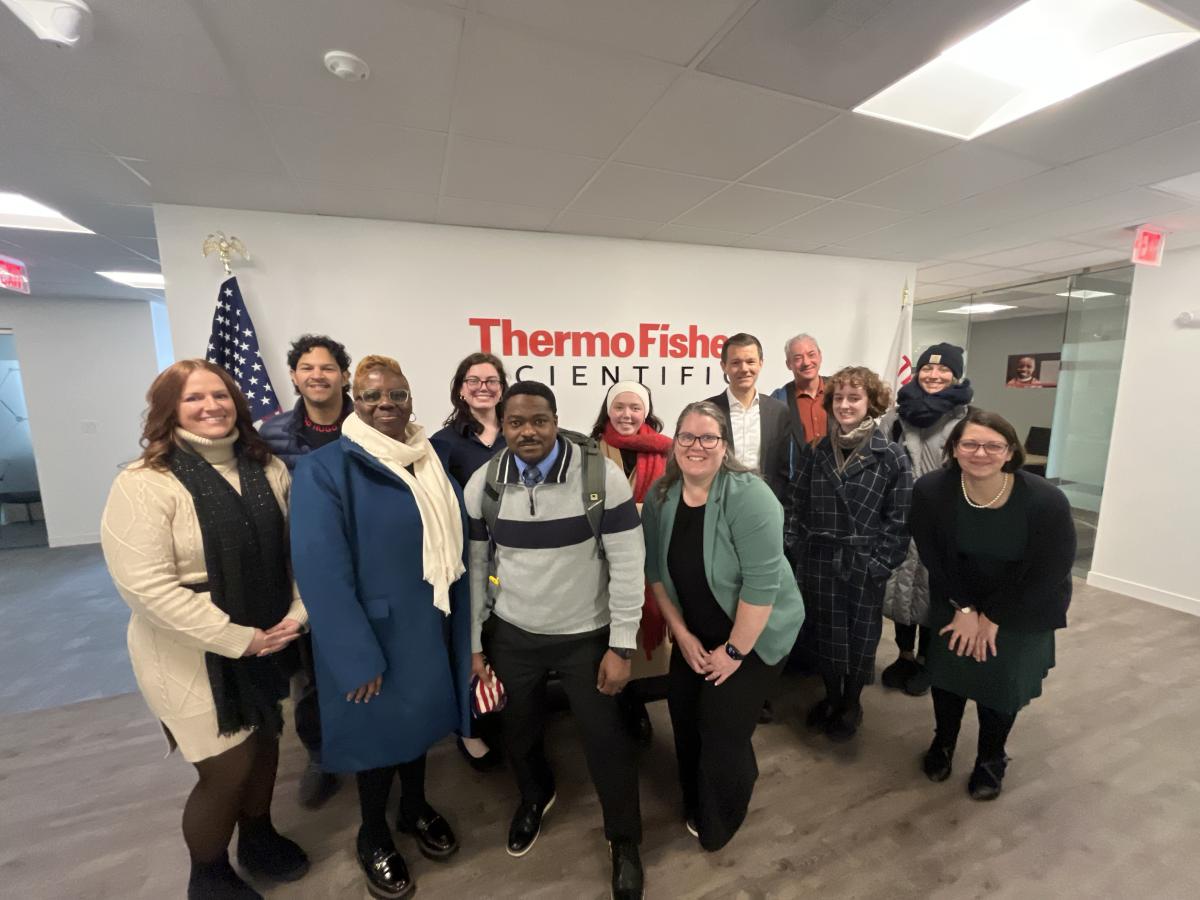
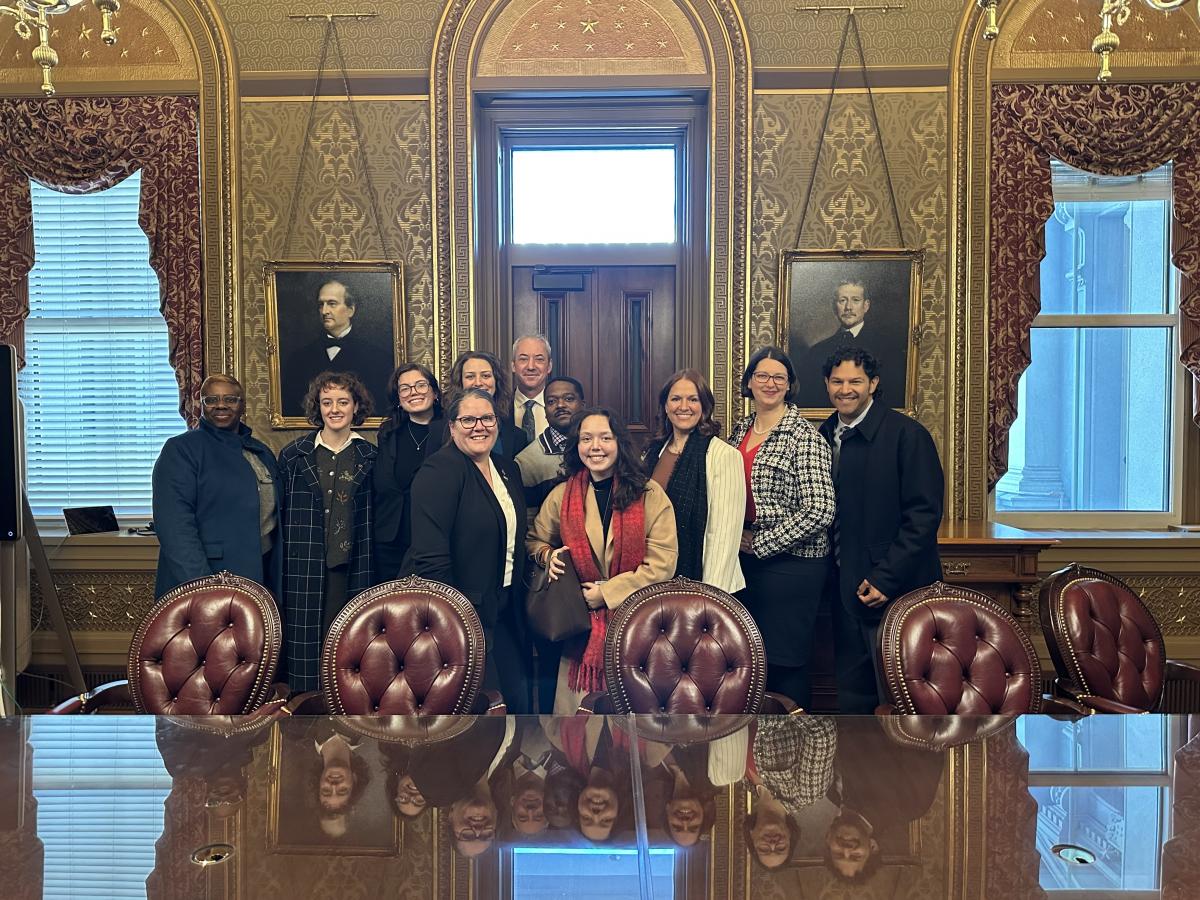
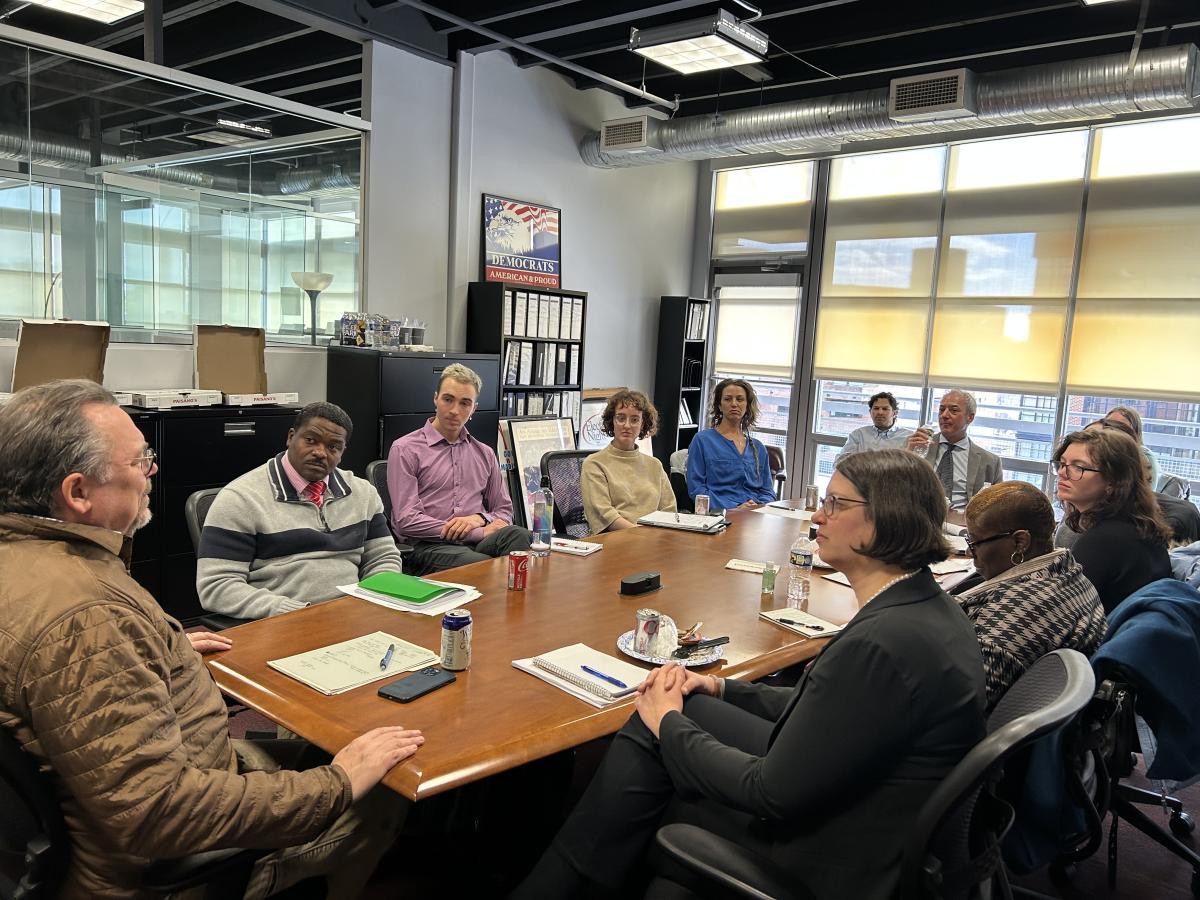
One of the most tangible returns that I see from having this degree is knowledge. I know knowledge is everywhere, but in the program I had the D.C. Colloquium, which I loved — one week in D.C. with the director and some great classmates I was able to meet and spend time with. We attended so many meetings. I just have to shout out the D.C. Colloquium because I just really enjoyed my time there. The coldest weather I've ever been in, in my life, but it was so valuable. And the knowledge that I gained from being in person with those classmates and really learning what they do and what they've experienced, and how they're utilizing the skills and strategies we're learning in class in their everyday roles— we had police officers, principals, program managers, coordinators, and those who were beginning their careers — I found it really valuable to see some of the examples that they shared.
Is the MPA program worth the investment?
I have to say yes — learning is always worth it, and the MPA program is extremely worth it, especially if you are in the public sector. If you're in the nonprofit sector, it's so valuable because there's always so much more to learn. In the leadership courses, you'll learn more about what kind of leader you are — there are so many different ways to lead. You might learn something that you may not have been familiar with. Evaluating programs, understanding where the nonprofit sector even began — that was valuable for me. I think context matters. In this program, you learn the context of so many different things, and all that helps us in the work that we do.
"I have to say yes — learning is always worth it, and the MPA program is extremely worth it, especially if you are in the public sector."
Don't delay, don't put it off. What better way to show that you love yourself than to take care of yourself and keep learning? I think learning is very important for us, and since we learn in different ways, why not find a program to help you, guide you, and benefit you?
So if you're sitting on a Carsey application, gather the references, write what you need to write, gather all your documents, and get the application in. Remember, time will pass. So while time's passing, we might as well benefit from it.