

















UNH Researcher Develops Model for More Equitable Welfare Fund Distribution

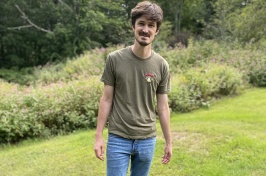
DURHAM, N.H. — Subsidy welfare programs are vital for providing families and individuals who are economically disadvantaged the access to essential services like child care, education, healthcare and housing. However, the current formulas in place for this type of sitribution often fail to ensure equitable outcomes across different regions. To address this, a University of New Hampshire researcher, in collaboration with colleagues from other institutions, has developed a novel optimization-based model aimed at improving welfare fund allocation and achieving more equitable results.

UNH Awarded $10 Million to Expand Climate Resilient Agriculture

DURHAM, N.H. — The University of New Hampshire has been awarded $10 million from the United States Department of Agriculture to develop more sustainable ways to implement climate-smart agriculture (CSA) strategies to expand farming and food production while enhancing economic opportunities, providing important ecosystem services like clean water and air and creating healthy communities in New England.

Targeted Home Systems to Remove PFAS More Cost-Effective Than System-Wide Solutions

DURHAM, N.H. — PFAS, the potentially cancer-causing chemicals known as ‘forever chemicals’, have become an increasing concern in home drinking water. Solutions to reduce the risk of exposure range from mandated municipal-level water treatment to under-the-sink home treatment systems. But are consumers willing to foot the bill for an additional treatment system to help municipalities meet new federal drinking water regulations? Researchers at the University of New Hampshire found that they are, if it helps reduce the risk and fits their budget.

Researchers From UNH and Northeastern Dig into History to Uncover a 'King'

DURHAM, N.H.— Archaeologists at the University of New Hampshire along with a historian at Northeastern University believe they have unearthed the long-lost homestead of King Pompey, an enslaved African who won his freedom and later became one of the first Black property owners in colonial New England.

UNH Receives $8M NSF Grant to Advance New Hampshire’s Science and Technology Leadership

DURHAM, N.H. — New Hampshire will boost its research leadership as an innovator in science and technology and increase its STEM workforce with investments across the state’s institutions of higher education, thanks to an $8 million grant to the University of New Hampshire from the National Science Foundation. The cooperative agreement award, one of just three of its type in the nation, aims to increase research opportunities, mentoring, training and partnerships between New Hampshire’s community colleges, four-year colleges and universities and industry.

Research Finds Pronoun Use Not Only Shaped By Language But Also Beliefs

DURHAM, N.H. — Pronouns like ”he” and “she” are at the center of much debate as society tries to shift to using more gender-inclusive pronouns like ‘they’ — especially when referring to those with identities that do not fit with traditional pronouns. Research at the University of New Hampshire looked at the use of pronouns in two different languages — including one where all pronouns are identity neutral — and found that people’s use of pronouns reflects not just the language they speak but also their ideologies.

Research Finds Existing Wetland Conservation Falls Short Fixing Gulf of Mexico Dead Zone

DURHAM, N.H. — Every year excess fertilizer runs off agricultural farms along the Mississippi River and flows into the Gulf of Mexico creating a dead zone that reduces oxygen levels and kills marine organisms. Restoring wetlands along field-margins has long been proposed as a way to stop some of this overflow, but research from the University of New Hampshire finds that current restoration programs fall short. Instead of the intended reduction of 45%-60% of the damaging nitrates from the fertilizer ending up in the river, they found the nitrate export was only reduced, at most, by 30%.