















Ten Ways UNH is Helping Communities be Environmentally Friendly

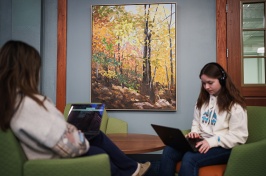
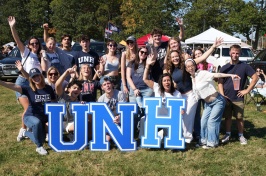
DURHAM, N.H. — University of New Hampshire researchers are partnering with local communities, farmers and residents to make the Earth a better place, often using participatory science which directly involves the public in the process. Home to the country’s first endowed Sustainability Institute, UNH fosters a healthy planet spirit that permeates the civic, professional and personal lives of our neighbors, near and far. As Earth Day approaches on April 22, here are 10 ways UNH is helping local communities, and those around the world, preserve the planet.

Research Finds Rural Americans Carry Heavy Burden Accessing Social Security Benefits and Information

DURHAM, N.H.—Research out of the University of New Hampshire’s Institute on Disability found that people who didn’t have in-person access to a nearby U.S. Social Security Administration (SSA) field office—specifically older adults and those with disabilities—and a knowledgeable staff member to help and talk through any issues had a significant decrease in access to social security disability, retirement and survivor benefits and services.

NH Statewide Food Alliance Reveals First-of-its-Kind Food and Agriculture Strategic Plan

DURHAM, N.H. — The NH Food Alliance, a statewide network coordinated by the University of New Hampshire, and the NH Department of Agriculture, Markets and Food announce the publication of the 2025 New Hampshire Food and Agriculture Strategic Plan, a first for the state.

UNH Research Shows Nerve Cells Move Backward to Reposition Contributing to Brain Evolution

DURHAM, N.H. — Researchers from the University of New Hampshire looked at the developmental process of the cerebral cortex —the outermost layer of the brain — and examined how neurons, or nerve cells, refine their positions in the  brain after birth. Their study shed light on the evolutionary transition from the three-layered cortex, considered an ancient structure, to the six-layered cortex, which is characteristic of higher mammals, including humans.

UNH Research Team Finds Concentrated PFAS in Watershed Foams

DURHAM, N.H. — Researchers at the University of New Hampshire used a newly designed device called a skimmer to test samples of foam formed on the top of local waterways for the presence of per- and polyfluoroalkyl substances, or PFAS. Preliminary findings show levels of the so-called forever chemicals were seven to seventy times higher in the foam than levels in the underlying surface water.

Valentine’s Days Tips for Finding Love, Romance or Just a Dinner Date

DURHAM, N.H. — Whether you’re in a committed relationship, swiping to find that special someone or taking a break from dating, as Valentine’s Day approaches it’s obvious that love is in the air. Experts from the University of New Hampshire share some advice to pinpoint your partner’s passion, design dating that fits you — no matter your age — and how to navigate today’s technology to better make that love connection.

Skip the Grand Gestures=

UNH Receives $3 Million to Expand Global Impact of Sustainable Seafood Program

DURHAM, N.H. — Thanks to a $3 million gift, the University of New Hampshire’s Center for Sustainable Seafood Systems will expand its global reach by creating an educational program that will focus on community-based seafood production for students from around the world to implement aquaculture techniques specific to their culture and communities.

UNH Receives Grant to Increase Local and Culture Foods for Manchester Schools

DURHAM, N.H. — Students in Manchester’s school cafeterias will soon have something new to crave on the their lunch menu — more local and culturally relevant foods sourced from farmers in Manchester and across New Hampshire. NH Farm to School, a community outreach program of the Sustainability Institute at the University of New Hampshire, was awarded the 2024 New England Food Vision Prize from the Henry P. Kendall Foundation.