
A tiny sensor could make a big impact for New Hampshire's dairy farms
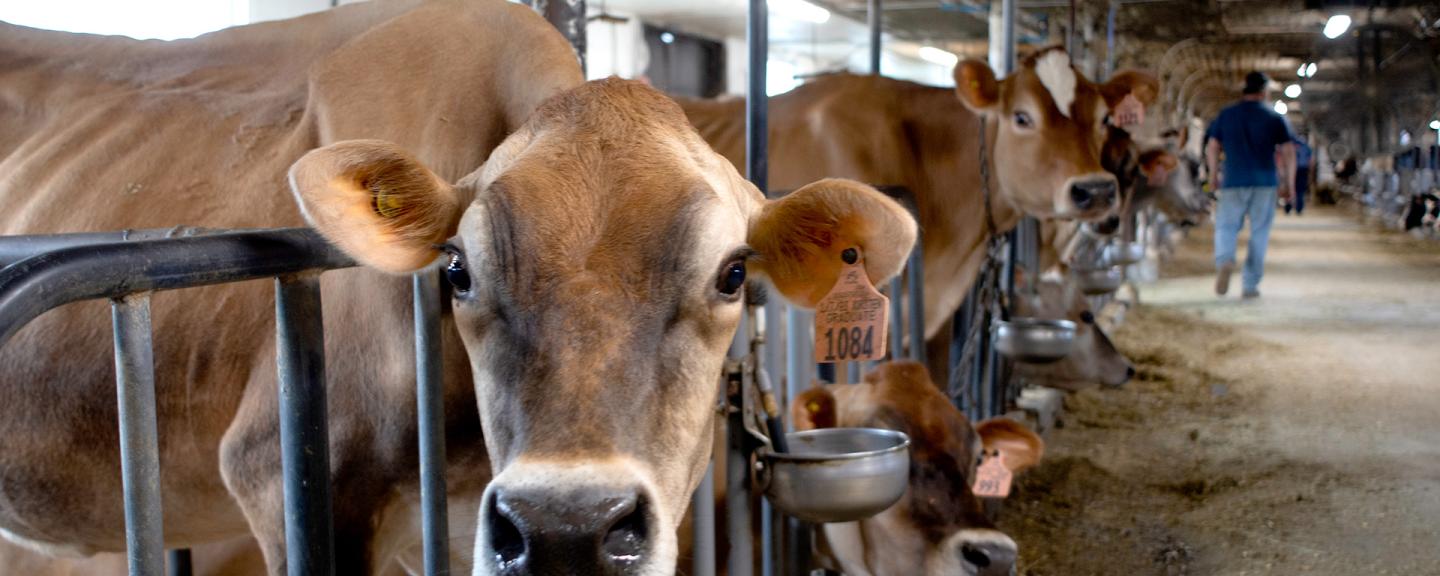
UNH researchers Claira Seely and Sarah Allen are partnering with the Grafton County Farm to determine if a small 4-inch capsule could help small dairy operations in New Hampshire become more efficient and productive.
The new technology, made by smaXtec, is called a bolus. It is placed in the cow’s stomach, where it does not cause harm or discomfort and remains for the duration of her life, measuring key health indicators, including body temperature, rumination, activity, hydration, and feed patterns. The collected data can be used to inform cost-effective herd management, nutrition, and labor decisions, as well as detect illness even before a cow shows symptoms.
These data-driven decisions could be a real boon for New Hampshire’s dairy producers, who don’t have the same ability as larger farms to absorb unexpected or unnecessary expenses, notes Seely, an assistant professor in the department of agriculture, nutrition, and food systems.
“Most people want the smaller farms to succeed,” says Allen, an Extension state specialist in dairy production. “These monitoring systems are another way to help keep small farms in business, which is good for all of our communities.”