
Food Among the Trees
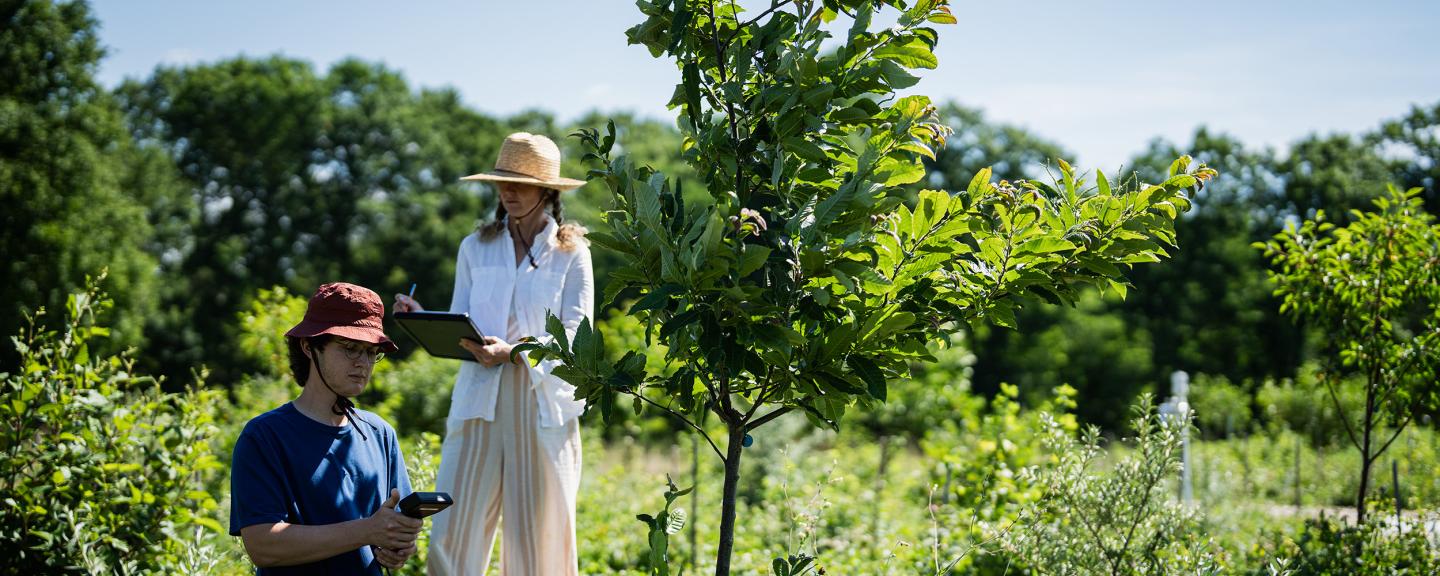
New Hampshire is more than 80% forested, second in coverage only to Maine in the U.S. The Adaptive Agroforestry Principles and Teaching (ADAPT) program is leveraging this important resource through the testing and teaching of agroforestry concepts and methods, work that will support local farming and sustain a stronger regional food system.
Agroforestry expands agricultural opportunities by embracing, rather than seeking to overcome, the tree-filled landscape. ADAPT is a collaborative effort led by Heidi Asbjornsen, professor of natural resources and the environment, that also includes researchers at Yale University, Dartmouth College, and 12 operating farms.
ADAPT works with three primary types of agroforestry. Forest farming grows shade-tolerant crops under an existing tree canopy. Food forests contain food-producing plants of varying heights, such as nut trees, berry bushes, and herbs, within the same space. And silvopasture provides livestock pasturing and grazing space among trees. Unlike most fully cleared pasture and crop lands, all offer welcoming habitats for beneficial insects, pollinators, and wildlife.
“Agroforestry can increase crop diversity and sustainability, providing farmers and growers with more resilience in changing conditions as well as expanding income-generating opportunities,” says Asbjornsen. “But agroforestry systems are complex to manage. Education and extension are critical parts of ADAPT so that we can share our research-based insights with the community.”