Biohazardous Waste Disposal Procedures
Medical Sharps & Contaminated Glass Disposal
- Collect in rigid puncture-resistant container labeled with a biohazard symbol or appropriately color-coded (red/orange)
- Seal container when ¾ full
- Place in red bag lined biobox (burn box), or contact Hazardous Materials Manager for pickup
Uncontaminated Glass Disposal
- Collect uncontaminated glass in a puncture-resistant container (e.g. blue white cardboard glass box, etc.)
- Seal container when ¾ full
- If using unlabeled container, label the container, "Sharp Objects Inside – Use Caution When Handling"
- Dispose of container in the trash
Note: Commercially made glass disposal boxes can be purchased from the UNH Chemistry Stock Room or other vendors such as Fisher Scientific.
Liquid Infectious Waste Disposal
Option #1: Steam Sterilization
Lab workers who process biohazardous waste through a steam autoclave are required to take appropriate Biosafety Training.
Option #2: Chemical Inactivation
- Add enough fresh bleach to liquid waste to reach 10-20% final concentration
- Mix solution well
- Allow to sit for 30 minutes
- Disinfected solution can then be drain disposed in a lab sink if no other hazards are present
*Other disinfectants can be found by searching the EPA approved disinfectant database.
*Aspiration flasks must be set-up accordingly:
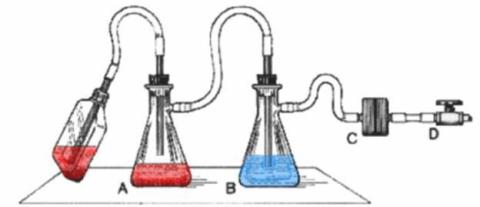
![]() |
Note 1: Disinfectant should be added prior to beginning waste collection and after in order to reach needed final concentration of disinfectant. Note 2: Flasks A and B should be held in a secondary containment pan, pail or bin. |
Solid Infectious Waste Disposal
Option #1: Steam Sterilization
Lab workers who process biohazardous waste through a steam autoclave are required to take appropriate Biosafety Training.
Option #2: Bio Box (Burn Box)
- Place material in biobox (burn box) lined with 2 red bags
- Seal interior red bag liner with lab tape or tied knot
- Seal second liner bag with lab tape or tied knot
- Close two smaller box flaps followed by the larger flaps
- Seal flaps with two rows of packing tape
- Write the name of the building and room number where the biological waste was accumulated on top of the box
Related Information
Biohazardous Waste Disposal Plan
Related Pages
NHDES Solid Waste Rules(Env-Sw 904)
_____________________
Incidents/Accidents with Biohazards
Shipment of Biohazardous Materials
Contact Information:
Biological Safety Officer (BSO)
603-862-0197
- About the Research Office
- Mission & Activities
- Organization Structure
- Committees
- Art Safety Committee
- Chemical Safety Committee
- Disclosure Review Committee
- Institutional Animal Care & Use Committee (IACUC)
- Institutional Biosafety Committee
- Institutional Review Board for the Protection of Human Subjects in Research (IRB)
- Occupational Safety Committee
- Radiation Safety Committee
- Research Council
- Responsible Conduct of Research & Scholarly Activity Committee
- UNH Manchester Safety Committee
- University Environmental Health & Safety Committee
- EPSCoR and IDeA at UNH
- Grants and Awards
- Newsletters and Reports
- Research Blog
- Staff Directory
- Contact Us
- UNH Research Areas
- Connections for Business
- Engage with UNH Research
- Find Research Area Experts
- Work with Office for Research Partnerships and Commercialization (ORPC)
- License Technology
- Innovation Catalyst Seminar Series
- Research Commercialization Introductory Online Course
- SBIR/STTR Info & Training
- University Instrumentation Center
- Staff Directory
- Tools for UNH Researchers
- Getting Started with Grantseeking
- Workshops, Education & Training
- Finding Funding
- Essentials for Project Directors / PIs
- Proposals & Submissions
- InfoEd Proposal Development
- Managing Awards
- Effort Certification
- Equipment, Resources & Services
- University Instrumentation Center
- Resources for Grad Students & Post-Docs
- Research Blog
- Faculty Research Excellence Seminar Series
- Forms & Policies
- Staff Directory
- Compliance and Safety
- Animal Care & Use
- Animal Care & Use FAQs
- Animal Resources Office
- Approval of Facilities Housing Vertebrate Animals
- IACUC Application Resources
- IACUC Application Review Process
- IACUC Meeting Schedule
- IACUC Membership
- Institutional Animal Care and Use Committee (IACUC)
- Occupational Health Program for Animal Handlers
- Reporting Animal Care and/or Use Concerns
- Training for Animal Care and Use Personnel
- Conflicts of Interest & Commitment
- Controlled Substances
- Data Management
- Effort Reporting and Certification
- Environmental Health & Safety
- Air Quality
- Art Safety
- Biological Safety
- Chemical Safety
- Emergency Procedures
- Hazardous Materials Management
- Industrial Hygiene
- Occupational Safety
- Confined Space Entry
- Contractor Safety
- Emergency Action and Fire Prevention
- Fall Protection
- Hazard Communication (Globally Harmonized System)
- Hazard Communication - Pictograms
- Hazard Communication
- Hazard Communication – Labeling
- Hazard Communication – Safety Data Sheets
- Hot Work
- Lockout/Tagout - Control of Hazardous Energy
- Occupational Safety Forms
- Occupational Safety Pamphlets
- Occupational Safety Programs
- Occupational Safety Resources
- Personal Protective Equipment
- Respiratory Protection
- Radiation, Laser, and X-Ray Safety
- Assistant Authorized User
- Emergency Procedures for Spills of Radioactive Materials
- Laser Safety
- NH Rules for the Control of Radiation
- Radiation Dosimetry
- Radiation Safety
- Radiation Safety Program Management
- Radiation Safety Resources
- Radiation Safety Training
- Radiation Surveys
- Radioactive Permits
- Radioactive Waste Disposal Requests
- Radionuclide Safety Sheets
- X-Ray Safety
- UNHCEMS
- EHS Training
- GHS Training
- Export Controls
- Financial Management
- Health Insurance Portability & Accountability Act (HIPAA)
- Human Subjects
- HIPAA Privacy Rule & Research
- Human Subjects FAQs
- IRB Application Resources
- IRB Application Review Process
- IRB Meeting Schedule
- IRB Membership
- IRB Review Levels
- IRB Training
- Institutional Review Board for the Protection of Human Subjects in Research (IRB)
- NIH Required Human Subjects Training
- Ask the IRB Sessions
- Misconduct in Scholarly Activity
- Responsible Conduct of Research & Scholarly Activity
- Forms & Policies
- Staff Directory
- Animal Care & Use
- Intellectual Property
- Invention Process
- Technology Transfer
- Material Transfer Agreements
- Copyright Protection
- Frequently Asked Questions
- Innovation Catalyst Seminar Series
- Research Commercialization Introductory Online Course
- SBIR/STTR Info & Training
- Office for Research Partnerships and Commercialization (ORPC)
- Directions to ORPC
- Forms & Policies
- Staff Directory
