
Seeds for a prosperous future
At first or even second glance, Durham, New Hampshire, is not an obvious epicenter for plant research. Its winters are long and cold, and space can be tight, as it is throughout the Granite State. At UNH, plant sciences are thriving — expanding possibilities and improving outcomes for farmers and growers across the Northeast. Researchers test how to protect plants from weather and pests, lengthen the growing season, and introduce new crops, and they’re laying the groundwork for a more prosperous and sustainable future for local horticulture and agriculture.
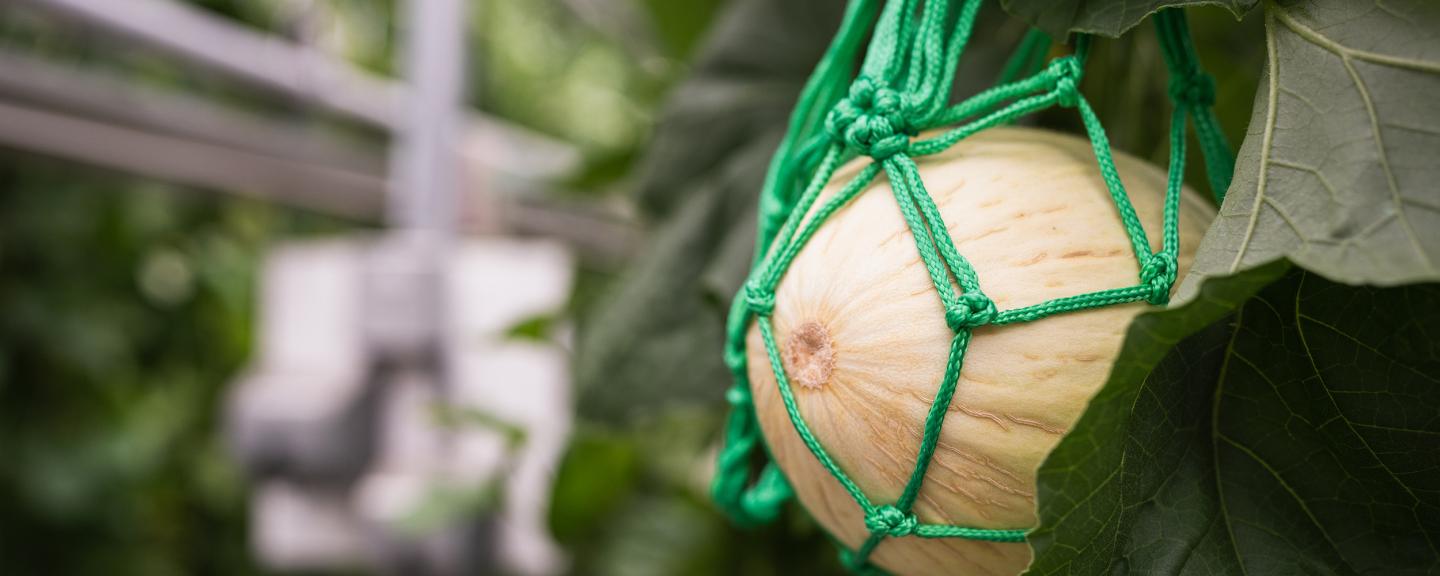
UNH has a long and proud Major new investments in protected agriculture and greenhouse facilities are positioning UNH at the forefront of plant science research in the Northeast.history in plant sciences. Its expansive facilities at the Woodman Horticultural Research Farm, Kingman Research Farm, and the Macfarlane Research Greenhouses have provided researchers with a wide range of growing conditions and opportunities over the years. Research highlights include the cucurbit breeding program that has developed more than 100 commercialized pumpkin, melon, and squash varieties over the past 70 years; the innovative implementation of high tunnels and other accessible tools for protected agriculture; the science-based support for kiwiberries and other high-value crop options new to New England to help diversify and strengthen cold-climate agriculture; and much more.
The future looks even brighter. Supported by federal funding, two significant new plant science initiatives will build on current strengths, improve facilities, and expand research options for current and new
plant researchers.
A federal partner for protected agriculture
A $2 million partnership with the USDA Agricultural Research Service (ARS) will support protected agriculture research to help secure local and regional food production in the Northeast. Protected agriculture encompasses an array of production technologies that enable farmers to increase production; lower risks from weather, pests, and disease; and extend growing seasons.
Applications such as row covers and high tunnels are also affordable and can be readily implemented on the small and medium-sized farms that are prevalent in New England. Regardless of the type of protected agriculture management, they enable farmers to grow more food within smaller areas, diversify crops, and improve crop quality.
Innovative research at UNH in the 1970s and 1980s led to the widespread adoption of high tunnels by farmers in New Hampshire and New England. Decades later, however, these early adopters are facing challenges with soil fertility, pest control, and other issues within the protected environment.
Ongoing research will help provide answers and solutions to these challenges while mitigating risk. Becky Sideman, professor and chair of the department of agriculture, nutrition, and food systems, and an expert in cold-climate horticulture and protected agriculture systems, will be leading UNH’s efforts in the partnership.
“In the Northeast, there isn’t a single agricultural system applied on a vast scale — it’s not possible here,” says Sideman. “That’s what makes it both challenging and wonderful. Growers aren’t locked into any one system, so there are many opportunities to diversify and meet the demand for good local food. We’re looking to provide the insights needed for them to succeed.”
Greenhouses for modern science
UNH’s Macfarlane Research Greenhouses have housed many hundreds of experiments over the years, but most structures date back to the 1940s and are not cost-effective to heat and maintain. Nearly $2 million in new federal funding will be used to renovate and enhance the greenhouses, as well as to establish the new Center for Excellence in Education and Discovery for Plant Science (CEED Plant Science). The work will improve UNH’s ability to develop cutting-edge research in plant management and train the next generation of innovators to support the greenhouse industry in the Granite State.
Despite the Northeast facing fast-growing weather-related risks to its $21 billion agricultural industry, the region has seen the least greenhouse expansion in the U.S. over the past decade. CEED Plant Science will help generate knowledge and expertise to help grow New Hampshire’s greenhouse production and strengthen its agricultural sector resilience while positioning the state as a regional leader in agricultural innovation and discovery.
When finished, the updated facility will support research, education, and Extension programming, as well as public-private partnership incubation activities. Its operations will also be far more efficient, greatly reducing maintenance costs and the energy footprint with modern plumbing and HVAC systems.
“Greenhouse agriculture in New Hampshire has the potential for strong growth, but it faces climate, pest, disease, and economic challenges that are specific to New Hampshire’s unique conditions,” says Anton Bekkerman, director of the NH Agricultural Experiment Station and COLSA’s associate dean for research. “Scientific discoveries and education made possible by the renovated CEED Plant Science facility will directly help address information gaps and support the sector’s growth and sustainability.”