
Why Get an Accelerated Master’s Degree in Bioinformatics?

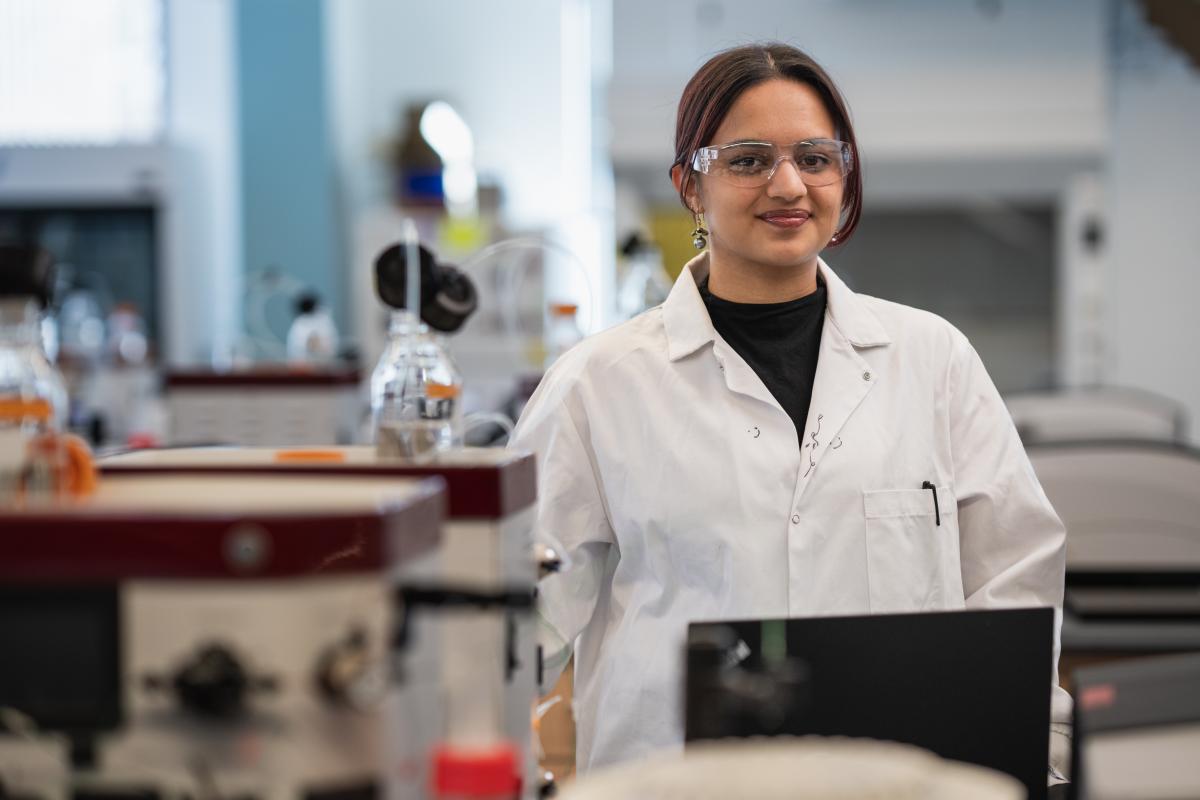
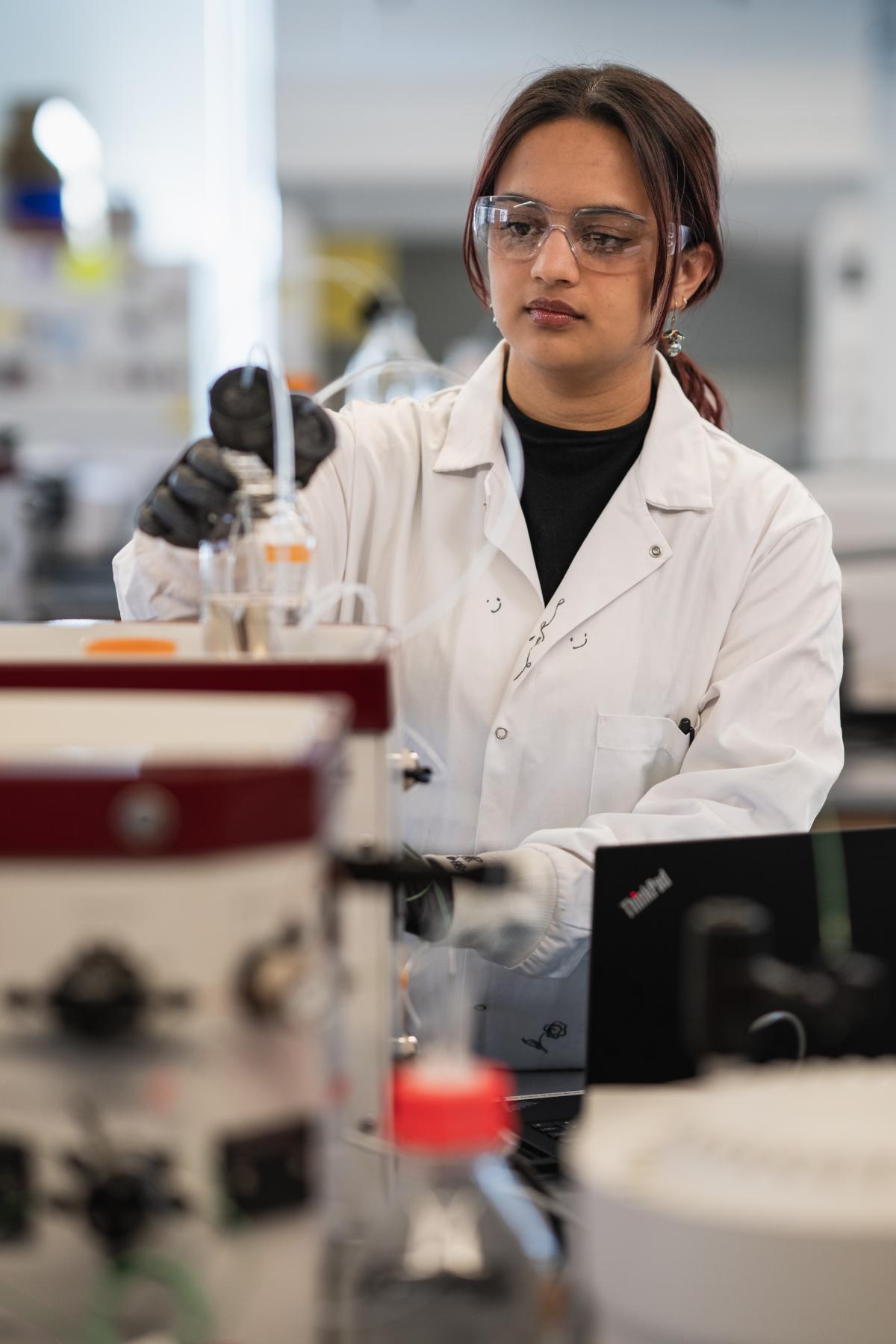
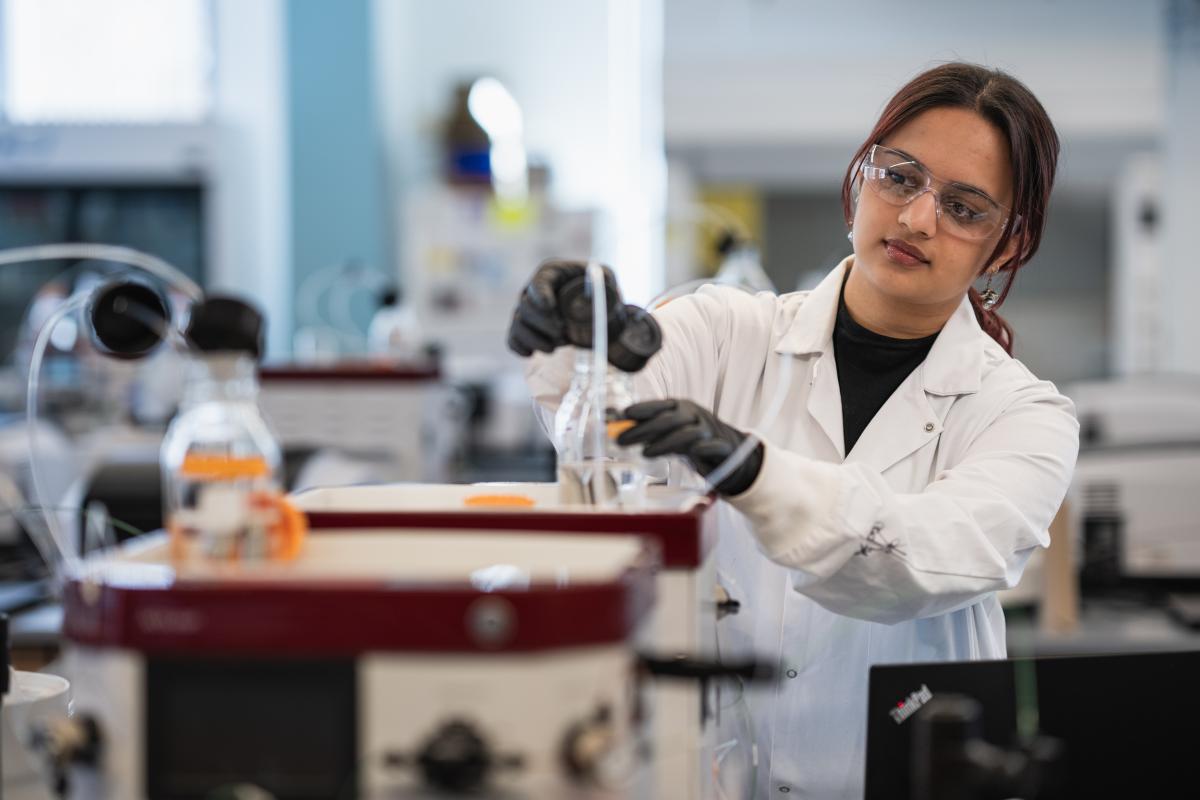
UNH graduate students gain valuable research experience and prepare for successful careers. An accelerated graduate degree can help save you time and money. Meet Disha Hegde '26, an accelerated master’s student in bioinformatics, and learn more about her journey to becoming a well-rounded scientist.
1. Why did you decide to do the accelerated master’s program?
I decided to do the accelerated master’s program because I wanted to continue my studies and to grow as a scientist. The accelerated program helps me do this in a much shorter period. If I had decided to do a typical master’s program after graduation, I would have needed an extra year or two. This program has allowed me to complete both my bachelor’s and master’s at UNH in four years.
"This program has allowed me to complete both my bachelor’s and master’s at UNH in four years."
2. Why did you decide to get a master’s degree in bioinformatics?
I wanted to become a well-rounded scientist who not only generates biological data but also understands how to analyze and interpret it. Bioinformatics gives me the computational and statistical skills necessary to work with large, complex datasets and to draw meaningful conclusions from experimental results. This skill set is especially important for modern genetics and genomics research.
“I wanted to become a well-rounded scientist who not only generates biological data but also understands how to analyze and interpret it. Bioinformatics gives me the computational and statistical skills necessary to work with large, complex datasets and to draw meaningful conclusions from experimental results.”
3. What is the coolest experience you’ve had in your graduate program?
One of the coolest experiences has been learning Python, a programming language, and using it to analyze biological datasets. Writing scripts to process and visualize data has allowed me to uncover patterns that are not immediately apparent from raw experimental results. I learned this through the Programming for Bioinformatics course. This course helped me understand everything from the fundamentals of computers to the generation of visuals for data produced in experiments.
“Writing scripts to process and visualize data has allowed me to uncover patterns that are not immediately apparent from raw experimental results.”
4. What research experiences did you have as an undergraduate?
As an undergraduate at UNH, I worked in multiple research labs where I gained hands-on experience in cancer biology, developmental genomics, and evolutionary genetics. I interned at Dartmouth and worked at the Cancer Center on a project on the age-related epigenetics of prostate cancer. At UNH, I studied which genes where responsible for lens regeneration in newts and I also studied which genes were affected in the brainstems of dehydrated cactus mice. Overall, UNH provided a comprehensive foundation in both wet lab and computational research.
5. What research are you conducting as a graduate student?
As a graduate student, my research focuses on comparing single-cell RNA sequencing data from naive mice and bleomycin-treated mice. I will analyze gene expression patterns at the single-cell level to understand how bleomycin affects different cell populations, especially immune cells and their molecular responses. The goal is to understand the role of macrophages in systemic sclerosis.
6. What is it like getting a master’s degree at UNH after getting your bachelor’s degree here?
Continuing at UNH for my master’s degree has been a smooth transition. It feels like a natural continuation of my bachelor’s degree, and being familiar with the faculty, research environment, and resources has allowed me to focus more deeply on my coursework and research, while building long-term mentoring relationships with faculty members.
“Continuing at UNH for my master’s degree has been a smooth transition. It feels like a natural continuation of my bachelor’s degree, and being familiar with the faculty, research environment, and resources has allowed me to focus more deeply on my coursework.”
7. What value does a UNH graduate degree have for you?
A UNH graduate degree represents strong scientific training, research experience, and interdisciplinary skills. The emphasis on both theory and hands-on research has prepared me well for future academic and research-focused careers. My experiences have given me confidence in my ability to contribute meaningfully to scientific projects.
“A UNH graduate degree represents strong scientific training, research experience, and interdisciplinary skills. The emphasis on both theory and hands-on research has prepared me well for future academic and research-focused careers.”
8. What are some of your plans or goals for after graduation?
After graduation, I plan to pursue a Ph.D. in cancer biology and work in a lab that studies cancer genomics. My long-term goal is to conduct impactful research on the molecular mechanisms of cancer, contribute to the development of new therapies, and eventually lead a research lab that integrates experimental biology with genomic analysis.
“My long-term goal is to conduct impactful research on the molecular mechanisms of cancer, contribute to the development of new therapies, and eventually lead a research lab that integrates experimental biology with genomic analysis.”