
Nathan Furey Appointed as the First Robert Summers Professor of Biology

Nathan Furey, associate professor of biological sciences in the UNH College of Life Sciences and Agriculture (COLSA), has been named the first Robert Summers Professor of Biology. The new professorship, established through a generous $1 million gift from philanthropist Robert Summers, recognizes exemplary research and a strong commitment to mentoring graduate students.
The award is designed to provide direct support to both the faculty recipient and their graduate students, fostering mentorship and research excellence. Anton Bekkerman, associate dean for research and director of the New Hampshire Agricultural Experiment Station, notes: “Strong graduate student mentoring helps bring forward new ideas and innovations that spark scientific discovery. The Robert Summers Professor of Biology is a great application of generosity that shows how UNH researchers like Nathan Furey can be empowered to mentor, guide, and enable tomorrow's scientists to follow their curiosity, seek answers to wickedly tough questions, and bring the ideas and innovations to life.”
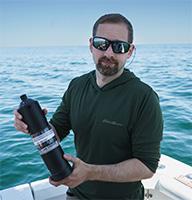
Nathan Furey
Furey’s lab focuses on aquatic animal movement, mostly fishes but also seabirds and crustaceans. To put it simply, Furey and his students study where the animals go and why. One focus is the spawning migrations of fishes that move from the ocean to freshwater to spawn, connecting our land and sea. Beyond reproduction, there is another motivation his lab investigates.
“Animals often move because of food, as they seek to eat and avoid being eaten themselves,” says Furey. “We have a variety of projects looking at changes in food availability and quality along the New England coast and how those changes affect the movement and success of animals in the ecosystem.
“I’m honored to be named the first Robert Summers Professor of Biology and am very grateful for Robert’s support of our graduate students, who are so important for research excellence at UNH,” continues Furey. “Graduate students really drive scientific progress out in the field and in the lab.”
The professorship funding will catalyze research in Furey’s lab in important ways: by directly supporting field work and by expanding opportunities for his students to do summer research, attend conferences, and develop innovative and exciting new projects.
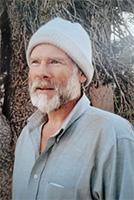
Robert Summers
The generous gift to establish it reflects Summers’ longstanding interest in advancing scientific inquiry and education and his aim to strengthen the academic environment for both faculty and graduate students in the life sciences.
Summers’ professional career was with the U.S. Geological Survey, where he had a distinguished career studying high-pressure rock deformation and earthquake source energy stored in fault zones. His work, when combined with released energy data gathered by seismologists, was key for a better understanding of seismic processes. But it was pitching in on a different kind of research in the Bay Area that ultimately connected him with UNH.
“I met [now UNH Professor of Biology] Jessica Bolker when she was a graduate student in Berkeley, studying sturgeon embryology and development,” says Summers. “I helped her in the lab tracking the different developmental stages whenever I could. We’ve kept in touch since, and Jessica said that there are a lot of good things happening in the UNH biology department that are worthy of support.”
“We are truly fortunate to have Robert Summers recognize the quality of our faculty and graduate students, and Nathan Furey perfectly embodies the intent of the Robert Summers Professor of Biology to recognize exceptional research and graduate mentorship,” says Elizabeth Harvey, associate professor and chair of the department of biological sciences in COLSA. “He has built an internationally recognized research program in fish ecology and animal movement. Equally important, he is an outstanding graduate mentor who trains highly skilled, independent young scientists through supportive collaboration.”