
The New England Agroforester - Spring Equinox 2026
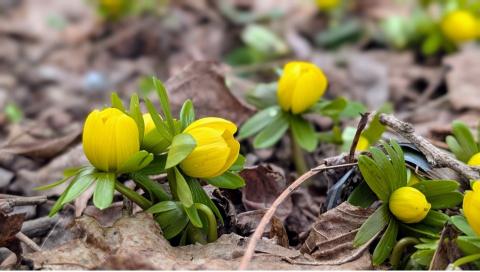
Winter aconite is one of the earliest flowers to break dormancy in New England, often blooming in late winter or early spring when sunlight first reaches the forest floor, making it an important early nectar and pollen source for awakening pollinators. Its presence reflects humus rich, well drained soils with moderate fertility and an ecosystem that supports spring ephemerals before canopy leaf out. Although beautiful, all parts of the plant are poisonous to humans and mammals due to cardiac glycosides, so it should be handled with care. Photo: Jess Gerrior, PhD
Field Season Awakens: ADAPT Spring Updates
Spring is here, and with it comes a surge of momentum across the ADAPT team. This issue brings fresh research updates, new resources for practitioners, upcoming events, and stories from the field as agroforestry activity ramps up across the region. Over spring, our team is diving into the planning and fieldwork needed to meet our 2026 goal of establishing all ADAPT agroforestry systems this year.
We invite you to share this newsletter with colleagues and contacts in your network and encourage them to subscribe. There’s a lot growing, and we want them to be part of it.
Advancing Agroforestry Across New England
The ADAPT team is actively establishing a network of experimental sites at UNH, Yale, and Dartmouth, alongside 12 cooperator farms across the region to serve as both demonstration sites and living laboratories that test the climate resilience and economic viability of various agroforestry practices. Along with this research, ADAPT is integrating education and outreach to advance agroforestry across the region.
Research Updates by System
Research into silvopasture is well underway with tree species selection finalized for several sites, focusing on both silvopasture-by-addition through planting trees in pastures and silvopasture-by-subtraction via thinning existing forests. Current studies are evaluating tree establishment success under different fencing strategies and measuring how soil scarification and environmental conditions such as shade impacts forage growth. Simultaneously, experimental Linear Gaps (ELGs) are being established for a forest farming study how understory crops like fiddlehead ferns and ramps, as well as more disturbance-adapted crops like elderberry and hazelnuts, respond to varying light and moisture gradients in a forest gap. Furthermore, multiple experimental food forest sites have been established to study interactions between nitrogen-fixing and non-nitrogen-fixing species in canopy, subcanopy, shrub and ground story layers, supported by soil sampling and microclimate sensors that track changes over time.
Economic and Social Insights
Natural Resources & Economics researchers are conducting willingness to pay (WTP) surveys to scope consumer demand for agroforestry products such as silvopasture-grown beef, chestnuts, and specialty fruits. To complement this, social science teams are interviewing regional producers to identify the cultural and social drivers behind agroforestry adoption and how these systems contribute to farm livelihood and long-term resilience.
Bringing Agroforestry to the Classroom
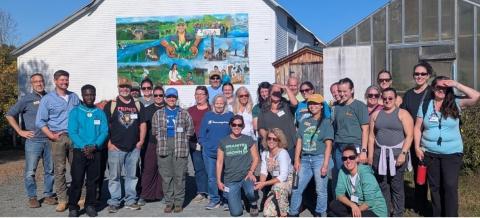
NH Agriculture in the Classroom has been bringing K–12 educators into the fields to learn about agroforestry and opportunities for their students. Participation in the pilot cohort has been strong, and this spring educators are visiting UNH’s Organic Dairy Research Farm, followed by trips to Beaver Brook and Joppa Hill Educational Farm to learn about food forest planning, and Mill City Grows in Lowell, MA to see how small‑scale urban food forests support school‑based learning. Tentative plans for the upcoming educator cohort include new agroforestry educator workshops designed to bring together multiple strands of programming through introductory activities, taste explorations, demonstrations, hands‑on learning, and a culminating cooking or baking component. Watch for details on the NH Agriculture in the Classroom webpage or contact Mike Smith to be part of the next cohort.
Twilight Talks and NEAT: A Season of Learning Ahead
UNH Extension is developing a series of summer and fall Twilight Talks in collaboration with the ADAPT team and UNH's new Research Assistant Professor Karam Sheban. These sessions will run from June through September and will focus on silvopasture, forest farming, and food forests. Tours will highlight these practices at cooperator farms and other regional sites, with a dedicated fall tour at UNH that features all three practices. For forest farming, Karam will draw on his professional network, including contacts through the Northeast Forest Farmers Coalition, and food forest tour sites are currently being selected.
Planning is also underway for the New England Agroforestry Training (NEAT) program. When Professor Sheban joins in May, the team will expand the existing framework into a full-day fall training that includes an indoor session followed by field trips. A confirmed date will be shared in The New England Agroforester summer issue. Extension Forestry Specialist Steve Roberge will serve as the contact for follow up, and readers are encouraged to sign up for Extension newsletter updates.
Springing Forward
ADAPT’s research team is busy ironing out last-minute details in research plans, gearing up for a busy spring season. Our highly integrated structure provides us with a unique opportunity to produce cross-comparable results representing the range of the New England site conditions at our three university campuses.
As spring accelerates our momentum, the work unfolding across our research sites is already shaping up to make a productive year. This growing energy sets the stage for updates across our research sites as we move deeper into the 2026 field season.

Events Calendar
- March 28, 2026: Non-Timber Forest Products Conference in Schuylkill Haven, PA. Topics include ginseng, goldenseal, ramps/wild leek, and forest farming updates; best practices for site selection; crop protection strategies; pest and disease management; emerging opportunities in leaf harvesting. Free and open to the public. To register, text 570‑449‑4239 or email schuylkillcountyconservancy@gmail.com.
- Through April 3, 2026: Massachusetts Tree Wardens and Foresters Association’s annual Seedling Sale. Proceeds support the MTWFA Scholarship Fund.
- April 10, 2026: NH Statewide Food System Gathering in Thornton, NH. The theme of this year’s gathering is strategic momentum. Attendees will learn about and engage in work in support of our food system and the NH Food and Agriculture Strategic Plan. For more information and to register, visit NH Food Alliance.
- April 13, 2026: Apply to Common Ground Country Fair to be a speaker, presenter, or demonstrator for its 50th annual celebration.
- Through April 30, 2026: Local Food Count data collection is live, and food organizations across New England are encouraged to get counted in this
regionaleffort to measure and increase local food sourcing in the region. The Local Food Count is led by New England Feeding New England (NEFNE), the primary initiative of the New England Food System Planners Partnership. Data areiskept confidential and used to identify and expand opportunities to expand regional food purchasing. NEFNE provides definitions and past results by state, and encourages sharing this opportunity with leadership and peers.- The NH Food Alliance delivered a webinar on the Local Food Count as part of its 2025-2026 Network Cafe Series. A recording of “What Gets Measured, Gets Managed: Inside the Local Food Count Project” is available.
- May 15–17: Northeast Livestock Expo 2026 in Windsor, ME. A family‑friendly weekend featuring youth livestock shows, clinics, workshops, a trade show, and more. Friday is Kids Day; Saturday and Sunday offer full schedules of beef, goat, and sheep events.
- June 4-5, 2026: 2026 Mid-Atlantic Agroforestry Conference in Pennsylvania Furnace, PA, focusing on forest farming and multifunctional buffers for landowners and professionals. Hosted by Penn State Extension and partners. Presentations, field tours, and workshops to build connections and expertise in sustainable agroforestry practices.
- June 22–25, 2026: National Agriculture in the Classroom Conference in Providence, RI. Join educators from across the country for workshops, tours, and resources that illuminate agriculture in the classroom.
- Spring 2026 MOFGA workshops related to agroforestry include Apple Tree Pruning (March 21 and April 21), Bringing Back an Old Orchard (March 21), Seed Swap and Scion Exchange ( March 29), Medicinal Mushrooms (April 9), and Forestry at Home (April 29).
- Spring 2026 Twilight Meetings hosted by UNH Extension: Visit UNH Extension for a comprehensive list of events and sign up for Extension newsletters tailored to specific interests in natural resources, agriculture, and other areas. For additional announcements by the College of Life Sciences & Agriculture (COLSA) at UNH, readers can follow on social media at Facebook, Instagram, or LinkedIn.
- July 31 - August 3, 2026: Northern Nut Growers Association’s 2026 Conference in Amherst, MA. The scholarship application deadline is June 15, 2026. NNGA supports nut growers by offering expert guidance on tree nut production and marketing, fostering community through annual member gatherings, and promoting long‑term stewardship.
Funding
NRCS Programs Open New Opportunities for Agroforestry Adoption
NRCS funds practices in each New England state, and a consistent funding source for practices is EQIP. A new program launched in December 2025 is the Regenerative Pilot Program (RPP), described as “a farmer first, outcomes-based approach to conservation designed to return the agency to its core mission – helping people help the land.” According to the NRCS website, this program will invest $700 million for regenerative agriculture, including:
- $400 million through the Environmental Quality Incentives Program (EQIP); and
- $300 million through the Conservation Stewardship Program (CSP)
Based on the related NRCS agroforestry standards, the RPP initiative supports a whole-farm approach. Creative applications of the program for agroforestry are abundant and might include:
- Under the Regenerative Pilot Program, silvopasture (combining timber, livestock, and forage production on the same acreage) can be implemented by bundling practices. A producer might use Prescribed Grazing (528) as a primary practice while adding Tree/Shrub Establishment (612) to create shade and shelter for livestock. Benefits could include trees that reduce heat stress on animals and provide additional fodder from leaves or nuts, while the livestock help manage understory growth.
- A farmer could implement Conservation Crop Rotation (328) within alleys, supported by the pilot program’s emphasis on soil health and long-term productivity. The agricultural crops provide annual income while long-term tree crops (such as walnut or pecan) mature. Such a project could also significantly reduce soil erosion and improve water quality.
- Riparian forest buffers are areas of trees, shrubs, and grasses planted along streams or wetlands to protect water resources. Producers can use Riparian Forest Buffer (391) to address water quality resource concerns, a key requirement of the whole-farm assessment in the pilot program. These buffers filter farm runoff, stabilize banks to prevent erosion, and can be managed to include fruit or nut-bearing species for additional harvestable crops.
- Windbreaks and shelterbelts are strategic linear plantings of trees and shrubs designed to protect crops, livestock, and soil from wind. A producer might bundle Tree/Shrub Establishment (612) with Mulching (484) to protect topsoil and improve moisture retention. Research shows that windbreaks can increase soybean yields by 15% and corn yields by 12% by reducing plant stress and soil loss.
Farmers interested in these applications can apply through their local NRCS Service Center using the new single regenerative application process. A Local Service Center locator is provided on the RPP website. Applications are reviewed by batches, with rolling deadlines. It is recommended that applicants start the planning process early, to build a relationship and develop ideas with a planner before the batching dates approach. Despite delays due to personnel changes, NRCS is one of the only enduring federal funding sources, so farmers are encouraged to be patient and persistent.
Value Added Producer Grants
Value Added Producer (VAP) grants help producers generate new products, create or expand market opportunities, and increase producer income. These grants support either planning activities (e.g., feasibility studies, business and marketing plans) up to $50,000, or working capital needs (e.g., processing, packaging, advertising, inventory, and salaries) up to $200,000. VAP grants require a one-to-one match (100% of the grant amount), which may include cash or eligible in-kind contributions. Application deadline: April 15, 2026. More info here.
Catalyzing Agroforestry Grant Program
The Catalyzing Agroforestry Grant Program (CAGP) is a rapid-resource initiative designed to help landowners and managers establish or expand agroforestry practices across the U.S. through a reimbursement-based funding model. Funds cover site preparation, planting stock, equipment rentals, and contractor fees, though cannot be used for livestock or large machinery.
Once a project is selected, participants receive expert consultations and site visits from regional partners like Virginia Tech and Appalachian Sustainable Development to ensure successful implementation. Awardees also gain access to the Agroforestry Regional Knowledge Exchange (ARKx), a network built to foster shared learning and peer-to-peer mentorship among producers.
2027 CAGP applications will be added to the website in the summer. Applicants should utilize the FAQs and Time and Budget Worksheet to strengthen their proposals. The network always welcomes more farmers and agroforestry organizations to complete a profile. For more details on eligibility and how to apply, visit the CAGP.
Disaster Recovery Support for New England Farmers
Following last year's drought, USDA has designated several New England counties as Natural Disaster Areas for Drought & Heat, allowing the Farm Service Agency (FSA) to extend much-needed emergency credit to recovering producers. Emergency loans can be used to replace equipment or livestock, reorganize a farming operation, or refinance certain debts. FSA will review the loans based on the extent of losses, security available, and repayment ability.
Primary counties eligible in Vermont are Bennington, Grand Isle, and Windham. Contiguous counties also eligible include Chittenden, Franklin, Rutland, Windsor (Vermont), Berkshire, Franklin (Massachusetts), Cheshire, Sullivan (New Hampshire), Rensselaer, Washington (New York).
Resources on Farmers.gov include the Disaster Assistance Discovery Tool, Disaster Assistance Programs At-a-Glance sheet, and Loan Assistance Tool. Local USDA Service Centers are available to file a Notice of Loss or answer questions about loan options. Applications for disaster recovery funding are due September 9, 2026.
Small Grants Program for Soil Carbon Research
The Research Initiative in Northeast Grazing Soils (RINGS) has announced a competitive small grants program to support soil carbon research in the Northeast U.S. The 2026 program expands current research efforts and contributes to the development of a Northeast soil carbon inventory for lands impacted by grazing. The RINGS small grants program webpage contains the full RFP and attachments. For more information, email lowery@tsip.org.
Maine Specialty Crop Minor Equipment Grant
Applications are open for the Maine Specialty Crop Minor Equipment Grant. The deadline to apply is April 3, 2026. More information here. Also see MOFGA’s current list of grant programs.
Photo Synthesis: Reader-Submitted Images
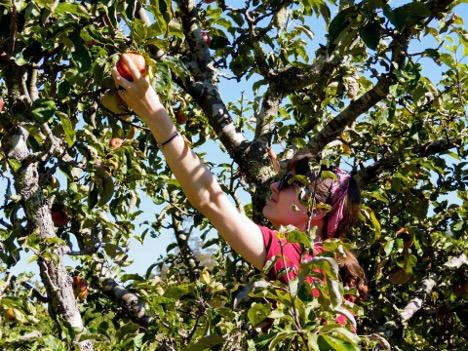
Contributor: Dave Jacke, Dynamics Ecological Design
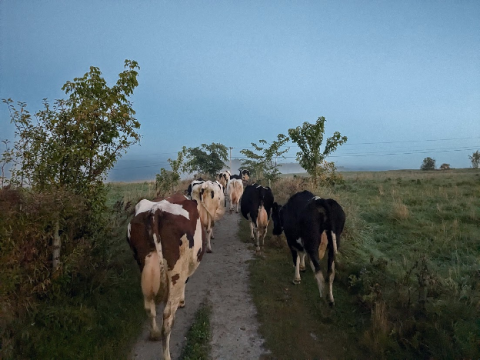
Contributor: Matt Choiniere, Choiniere Family Farm
Parting quote
The Spring Equinox marks the moment the earth leans toward the sun again, and we lean toward the work of a new season. In parting, this quote by journalist Doug Larson: “Spring is when you feel like whistling, even with a shoe full of slush.”
UNH Land, Water, and Life Acknowledgement
As we all journey on the trail of life, we wish to acknowledge the spiritual and physical connection the Pennacook, Abenaki, and Wabanaki Peoples have maintained to N’dakinna (homeland) and the aki (land), nebi (water), olakwika (flora), and awaasak (fauna) which the University of New Hampshire community is honored to steward today. We also acknowledge the hardships they continue to endure after the loss of unceded homelands and champion the university’s responsibility to foster relationships and opportunities that strengthen the well-being of the Indigenous People who carry forward the traditions of their ancestors.