
Where Wild Roots Run Deep
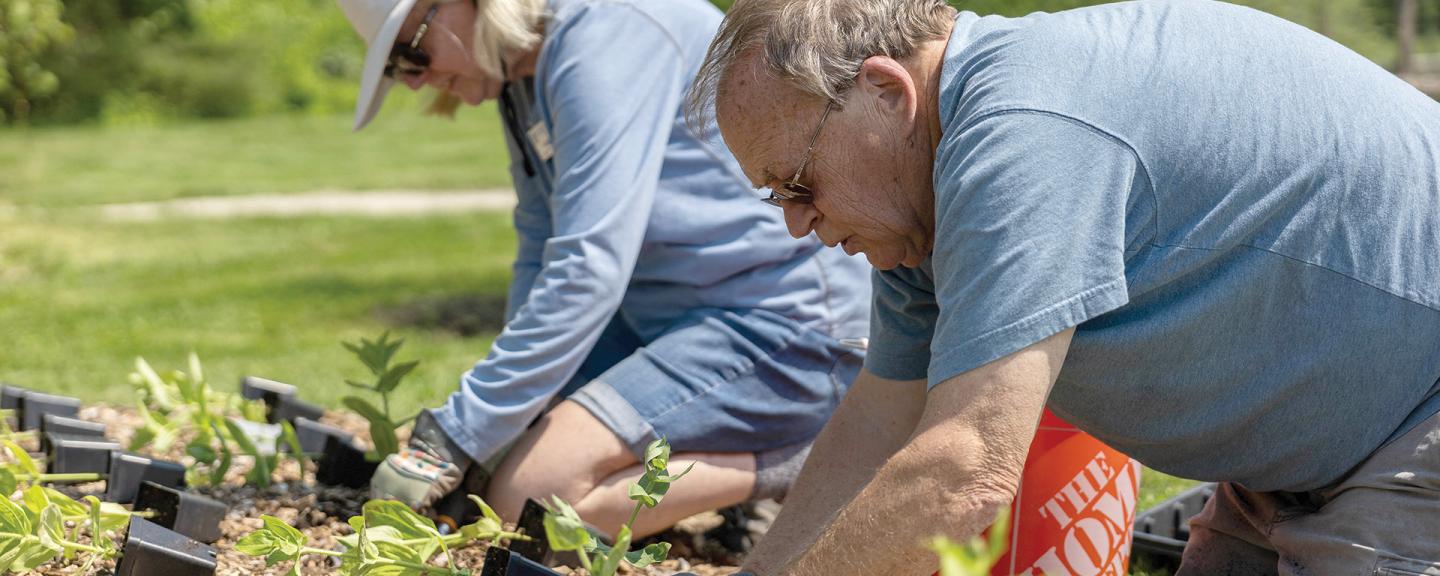
There’s no such thing as a typical New England growing season. 2025 was dry and hot, but it could just as easily have been wet and cold. The gardeners best at navigating these seasons are those who have experience, and the plants they recommend have a track record of surviving the region’s fickle weather.
In other words, native plants.
Stacey Scaccia, a Master Gardener with UNH Extension, has been gardening all her life. Her first step is observation.
“Spend some time getting familiar with your yard,” she says. Notice where the sunlight falls, which areas are dry and exposed, and which are shady and wet.
“As gardeners, we say ‘don’t fight the site’ and ‘right plant, right place.’ You’re already ahead of the game when you’re putting a native perennial somewhere it would naturally grow,” Scaccia says.
Native plants suit New Hampshire’s growing conditions and are less likely than non-natives to require fertilizers. They also tend to grow deeper roots, which allows them to survive dry patches.
It turns out that there’s an even better reason to choose native plants, Scaccia says. They are also much more likely to become an asset to the local ecosystem.
At the Extension Demonstration Gardens, hosted by NH Audubon at its Massabesic Center, about 70% of the plants are native. Scaccia says gardens should reflect the seasons, even if they are not pleasing to the human eye. Flower stalks, petals long fallen, are left so that birds can forage for seeds. Hollow stems are also allowed to remain, as tiny native bees will lay eggs within them. Fallen leaves are a blanket for overwintering insects.
“That urge to clean up is very detrimental to native bees and fireflies,” Scaccia says. Gardens are works of human creativity that can be appreciated by many forms of life.
“Becoming a master gardener has completely changed how I garden,” Scaccia says. “Before I used to garden for myself. Now I garden for nature.”