
Dune boon
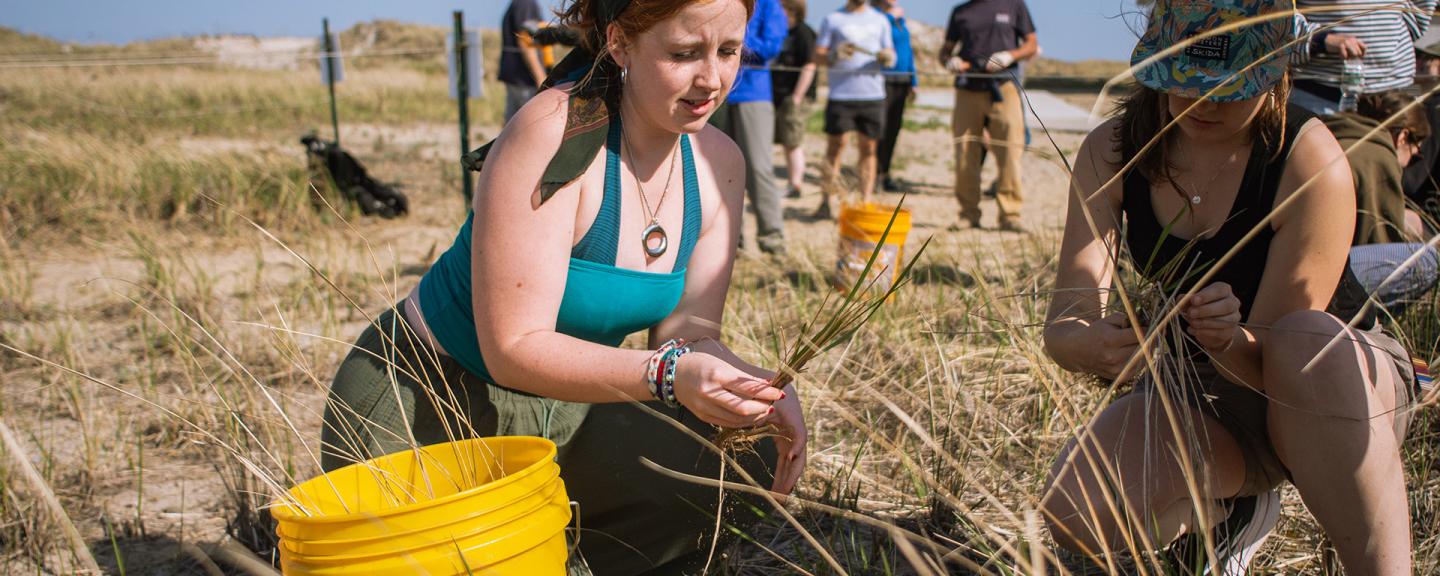
Dunes are a critical way nature helps protect ecosystems and mitigate damage from coastal storms — but they are vulnerable, too.
To save the dunes as storms and coastal flooding become more frequent, UNH researchers have turned to American beachgrass — hardy plants that both stabilize dunes against erosion and help them grow by trapping blowing sand.
The commercial cost of beachgrass puts a strain on coastal conservation efforts, so NH Sea Grant and UNH Extension, in a project led by Coastal Ecosystems Specialist Alyson Eberhardt, operate a beachgrass nursery called the Common Garden. The nursery ensures a supply of free beachgrass is available to help shore up the vulnerable coastline. Since its founding eight years ago, the Common Garden, which sits on less than a quarter acre of land at Hampton Beach State Park, has provided more than 30,000 beachgrass plants for dune restoration and conservation projects.
Without the dunes, homes, roads, and other parts of the built environment are imperiled. But it’s not just humans who suffer. Many animals, such as migrating monarch butterflies, rabbits, and piping plovers — shorebirds listed as threatened by the U.S. Fish and Wildlife Service — make a home among the windswept sand.