Battling Beach Erosion with a Blade of Grass
Coastal storms cause more than just a mess. A single event can wreck municipal budgets, such as a January 2024 storm that caused $1.66 million in damage to Rockingham County, according to FEMA. Dunes are a critical way that nature helps mitigate the damage, but they are vulnerable, too.
It’s a sticky business, keeping the dunes of New Hampshire’s coast in place. Dunes are “sacrificial systems,” says Alyson Eberhardt, coastal ecosystems specialist for UNH Extension and Sea Grant, meaning that they absorb wind energy and storm surges in order to protect the properties and ecosystems of the seacoast — often to their own detriment.
In the fight to save the dunes, UNH researchers have turned to American beachgrass. It’s a plant as pricey as it is powerful, with commercial nurseries charging more than $1 per stem. That price puts a pinch on coastal conservation, which is why Sea Grant and UNH Extension, in a project led by Eberhardt, operate a nursery to make sure that there’s a supply of beachgrass to help shore up vulnerable coastline. The nursery, called the Common Garden, occupies less than a quarter-acre of state land on Hampton State Beach. Since its founding eight years ago, the Common Garden has provided more than 30,000 beachgrass plants for local dune restoration or conservation projects, all at no cost.
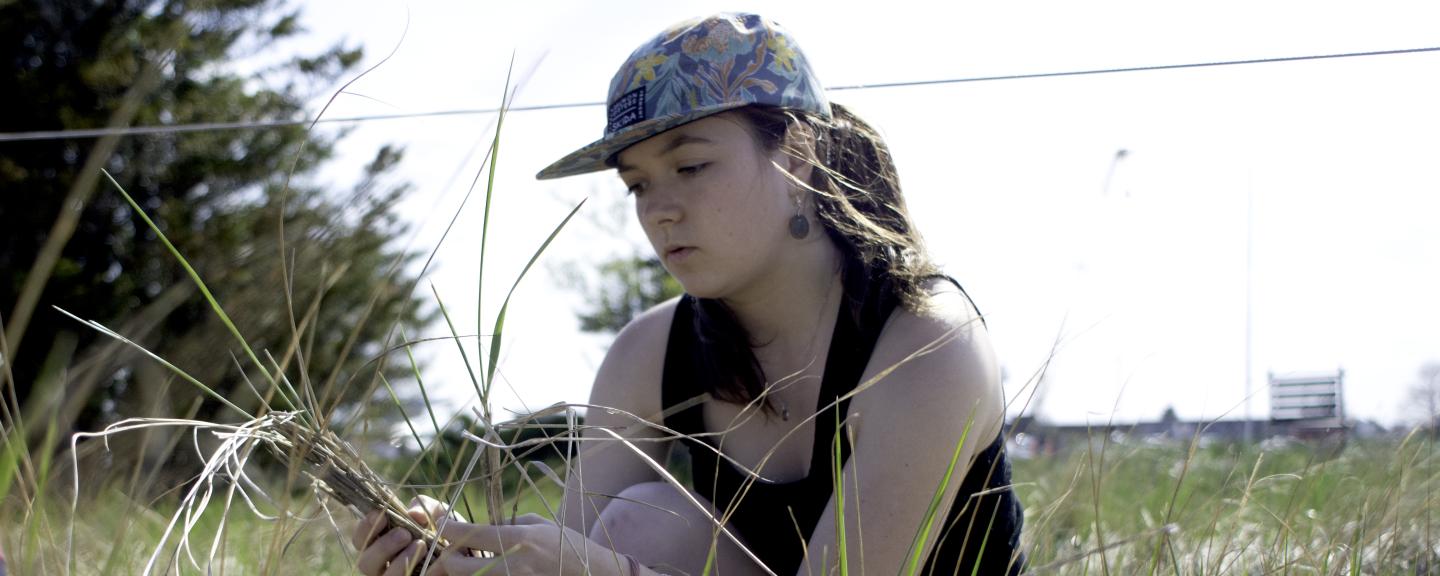
These plants haven’t just evolved to survive in the windy, salt-sprayed coastal environment, they’ve developed strategies to strengthen and grow the dunes. Their roots stretch deep into the sand, and rhizomes, which spread the plant laterally along the dune, provide structure against erosion.
Beachgrass also helps the dunes grow. Stiff and up to three feet tall, the leaves of beachgrass catch sand blown by the wind, causing the grains to fall. Researchers have seen beachgrass get buried in several feet of sand from a single storm and survive, its leaves stretching through the new layer to again find the sun — and to ensnare sand in the next storm.
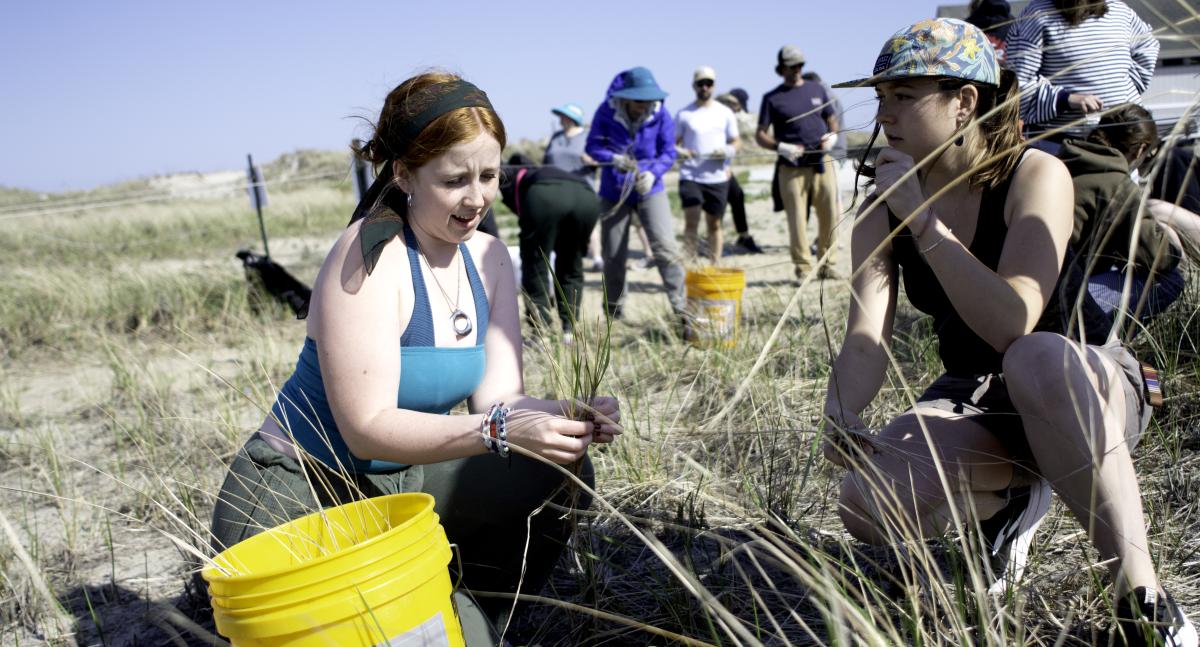
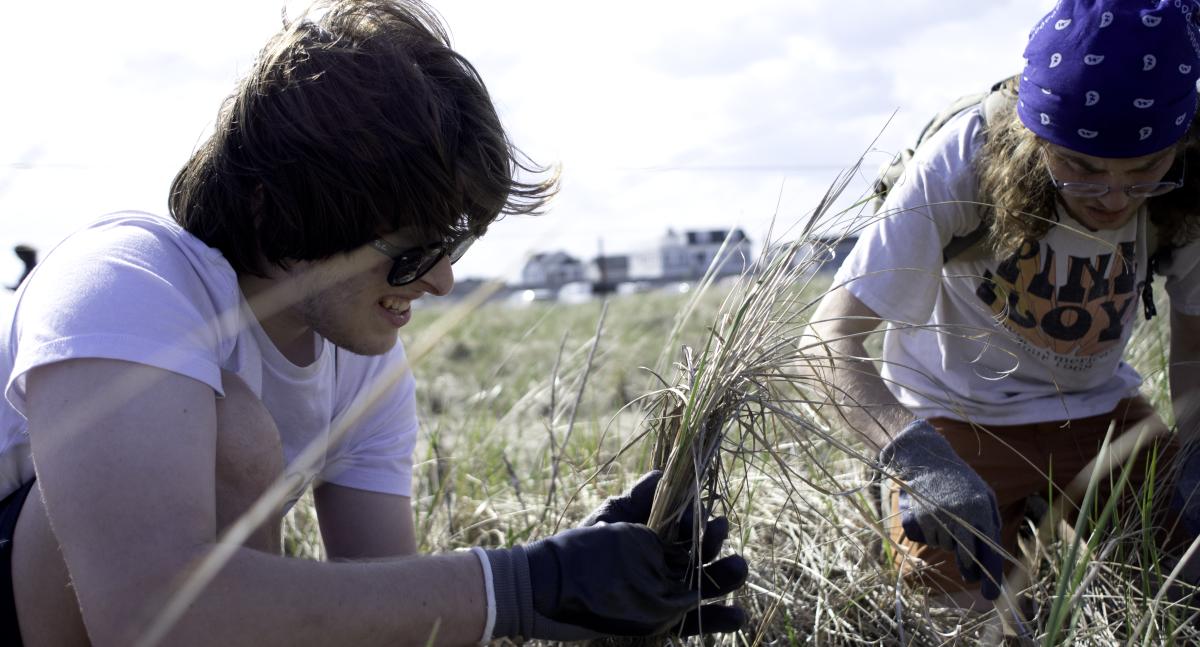
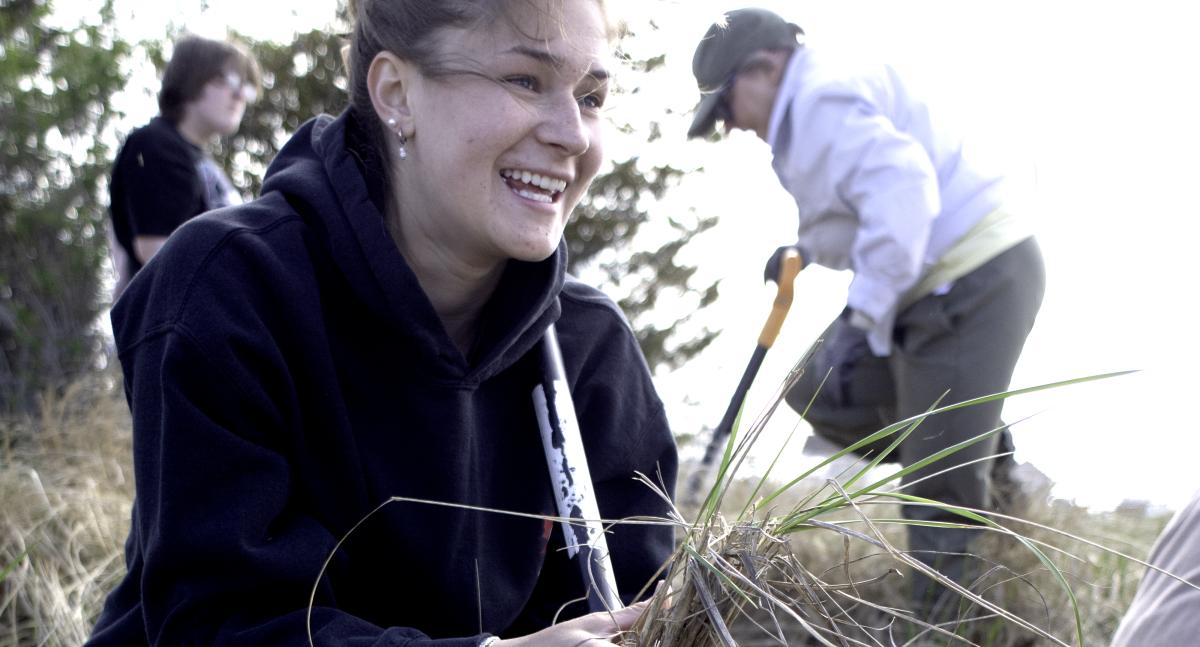
Some of those distributions have been small, with a property owner arranging a time to visit the garden and collect enough plants to fill a couple of buckets. Other efforts require plants by the thousands, such as a recent project in May of 2026, when the call was put out for volunteers to spend an afternoon harvesting plants and then replanting them to restore an eroding dune in Hampton.
Dunes are important to the human infrastructure as well as the wildlife along the coasts. When storms drive surges of seawater inland, it’s the dunes that those surges hit first, and it’s the dunes that absorb that energy. Without the dunes, homes, roads, and other parts of the built environment are imperiled. But it’s not just the humans who suffer without dunes. Many animals, such as migrating monarch butterflies, rabbits, and piping plovers — shorebirds listed as threatened by the U.S. Fish and Wildlife Service — make a home among the windswept sand.
It’s a diverse web, all held together by these critical blades of grass.
“The grass is really the engineer of the dune, it’s working both above and below ground,” Eberhardt says. “It really performs incredible functions in both stabilizing the dune and building it up.”
Green growth
The crowd of people who attended one of Eberhardt’s dune planting events in May included several students from UNH’s College of Life Sciences and Agriculture. Among them was Ava Bjorkman ’28, an environmental science and sustainability major who founded the New Hampshire Chapter of Surfrider, a nonprofit aimed at healthier coasts and oceans.
Bjorkman is from Massachusetts and harbors a love for New England’s coastline, as well as for all those who make a home among its rocks, marshes, and dunes.
“I grew up going to New Hampshire and Maine beaches, and I’ve always wanted to protect my local surf spots and protect the local habitats for bird nesting,” Bjorkman says. Her sense of protection extends to human habitats, which remind her of her grandmother’s beach cottage. “Helping these communities is really important to me.”
To that end, she organized the New Hampshire Surfrider Chapter in the fall of 2025 and serves as its first president. Bjorkman has volunteered with Surfrider since her middle school years and saw potential for a chapter based out of UNH.
“I wanted to continue that relationship and bring it to a wider array of people,” Bjorkman says. The local chapter has given students opportunities to volunteer with efforts such as the beachgrass harvest, and members have attended the regional conference for Surfrider’s Northeastern chapters. Since founding it in the fall, Bjorkman says that Surfrider has “blown up.”
Like root systems of American beachgrass, the network of young conservationists are creating a structure to keep dunes healthy for another generation.