
UNH Launches Center for Neurodiversity
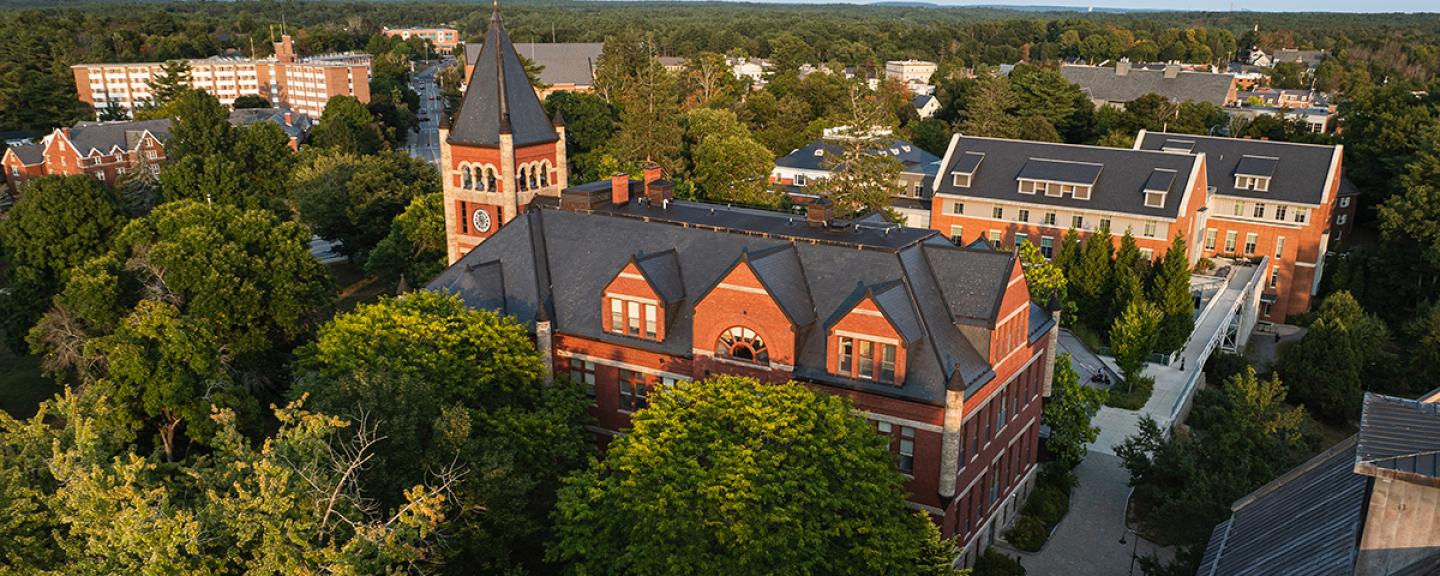
The University of New Hampshire has launched the UNH Center for Neurodiversity, an initiative that will serve all members of the university community and aims to celebrate neurodiversity and enhance well-being campus-wide.
UNH’s Center for Neurodiversity will benefit not only neurodivergent members of the university community, but everyone. It was created with a focus on overall well-being and is aimed at providing resources to all students, staff, and faculty.
The center’s mission is “grounded in the belief that neurodivergent individuals can benefit from education and adjustments that address barriers, correct misunderstandings, and break apart norms that center ableism.”
“We talk a lot about ableism, and the center becomes a way to really educate our community to be more inclusive of all,” says Jeffrey Halpern, a member of the UNH Center for Neurodiversity task force and professor in the College of Engineering and Physical Sciences. “We agreed that the center should be for all of UNH. It should make academia more accessible even to those that would see themselves as neurotypical.”
The center’s vision was first conceptualized in 2021 by Nadine Petty, former associate vice president for community, civil rights and compliance who left her position at UNH on May 15. Petty benchmarked with colleges and universities who had created centers for neurodiversity at their institutions and collaborated with UNH faculty and staff who have a strong interest in fostering an inclusive and supportive campus environment. By 2023, Petty and the neurodiversity task force began putting pieces of the center in motion.
It is currently being operationalized in phases and has soft-launched with a narrow scope, focusing services on members of the UNH community, though the long-term vision is to broaden services to external communities and the state of New Hampshire. There is an opportunity to house the center in a future designated student success consortium on campus, as well.
“The center’s existence excites me because neurodiversity is inclusive of anyone who has a brain,” Petty says, “and there are unique differences in how our brains function and how our thinking is operationalized. Some brains do not work in ways that might be considered typical, but these differences are not deficits that need fixing. Instead, they create opportunities and enrich our interactions with each other. The center works as a conduit for this enrichment.”
Neurodiversity is a spectrum, says Kathryn Greenslade, co-chair of the neurodiversity task force and associate professor in the College of Health and Human Services, and includes individuals who are neurotypical as well as individuals who are neurodivergent.
“We want to make sure that everyone on campus is really aware that neurodiversity is a factor that can influence well-being and belonging and success at a post-secondary level,” Greenslade says. “We really want to make a UNH community where we can be promoting well-being and belonging of all students across the spectrum of neurodiversity. We are thinking broadly about the things we can put in place to make UNH a more welcoming community for everyone.”
During this initial phase, the center will provide “education, outreach, research, support and advocacy” to the campus community and will partner with UNH’s Institute on Disability (IOD), TRIO Scholars, Student Accessibility Services, the Civil Rights and Equity Office, the Center for Research, Career and Professional Success (CaPS), the Center for Academic Resources, and more.
Among the services available during this phase will be more deliberate support for internships and work experiences for neurodivergent students in UNH offices and laboratories, as well as an audit of campus-wide policies and practices to identify inadvertent challenges to neurodivergent individuals.
A significant focus during the early phase of being live has been outreach to UNH faculty and staff. Members of the neurodiversity task force have made it a priority to provide the tools necessary for faculty and staff to make any required adjustments to things like syllabi and class protocols or approaches.
“The center is really for anyone that needs something different than what we already have, and a way to provide them with a space and support and tools. But it’s also about providing staff and faculty with the necessary training and resources to be able to assist students and allow them to learn at the pace and in the way they learn best,” says Jes Crowell, co-chair of the Center for Neurodiversity task force and director of the TRIO Scholars (SSS) program.
Task force members hosted several workshops during the spring semester as part of their educational outreach to faculty and staff. In his role as a teaching and learning fellow, Halpern hosted two workshops for faculty, one about taking practical action in the classroom and one about how to approach a syllabus and class structure to be more neuroinclusive. These workshops were based on his research into how to build a syllabus that promotes community well-being and neuroinclusion.
In addition, Melissa Diodati (IOD, neurodiversity center task force member), Ariel Schwartz (IOD), and Greenslade hosted a faculty development workshop on effective strategies and practices for supporting neurodiverse learners. This interdisciplinary team brought together Greenslade’s research on supports for neurodiverse post-secondary students and the extensive experience and expertise of Diodati and Schwartz, who led the IOD’s UNH-4U program, which increased access to higher education for students with intellectual disabilities.
“The center becomes a way to really educate our community to be more inclusive of all,” Halpern says. “I see it less about support alone and more about advocacy for changing some of the structures in place. For us it’s always about ‘How do we support well-being and belonging for the whole community?’”
Crowell brings unique personal experience to her role on the task force, as one of her sons was diagnosed with autism at 13 and another with ADHD at 14. She hopes the center becomes an outlet for students and other community members like her sons and helps parents feel more comfortable sending their children to study at UNH.
“Parents want to know there is a place for their child; many are so afraid of sending them away from home, specifically due to students who are neurodivergent being known to struggle with time management and executive functioning skills,” Crowell says. “So to know there’s a place where people will be there to help, parents feel so much better. It definitely eases a lot of parents’ minds.”