| |
 |
Nationally Known Sociologist Returns to UNH to Run Carsey Institute
Contact: Erika Mantz
603-862-1567
UNH Media Relations
January 21, 2004

DURHAM, N.H. – Cynthia “Mil” Duncan will return
to the University of New Hampshire this spring as founding director
of the Carsey Institute for Families and Communities. Seeded by
a $7.5 million gift from alumna and television producer Marcy Carsey,
the institute will serve as a center for faculty in the social,
behavioral and health sciences conducting research on individuals,
families and communities.
Widely recognized for her research on rural poverty, Duncan was
a sociologist at UNH for 11 years before leaving to become director
of the Ford Foundation’s Community and Resource Development
Unit in 2000. At the Ford Foundation she was responsible for a
team of national and international leaders in the community development,
youth and environmental fields and a $70 million annual grant program.
 |
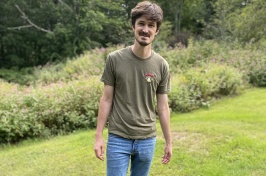
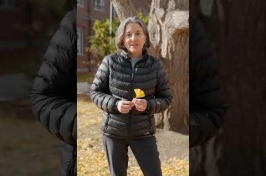
Cynthia "Mil" Duncan |
“
With Mil Duncan at the helm, the Carsey Institute has the potential
to be an important national research center,” says President
Ann Weaver Hart. “She brings a deep knowledge of community
development issues and poverty, as well as a broad knowledge of
northern New England communities, in particular rural communities.
We are fortunate to have someone of her caliber return to UNH.”
Duncan starts May 1, 2004.
In 1999, Duncan published “Worlds Apart: Why Poverty Persists
in Rural America,” an award-winning book that grew out of
her time working in Central Appalachia in the 1970s and 1980s.
In it she described poverty, culture and politics in communities
in Appalachia, the Mississippi Delta and northern New England,
exploring the connections between poor families and poor places.
“
I have always had one foot in academia and one foot in the policy
and practitioner world, and I think my experience will give me
some advantages in building the institute,” Duncan says. “Leading
the Carsey Institute is a once-in-a-lifetime opportunity to build
a research institution that can be a genuine resource for communities
undergoing significant changes.
“
I believe a quality university with excellent faculty like UNH
has an obligation to share the good thinking and investigations
of its faculty and students with the public — with decision
makers who are on the line every day, with citizens engaged in
their communities and with policy makers who are drawing up the
rules that shape families’ and communities’ options,” Duncan
said. “The university’s commitment to the institute
is really wonderful.”
The Carsey Institute will support faculty and student researchers
developing cross-disciplinary projects that contribute to national
discussions about policies affecting families and communities,
and will provide a bridge between UNH faculty and northern New
England communities and institutions.
“
There are so many centers on campus doing so much great research,
but we need someone who can see the big picture in order to optimize
the impact it can have on a state, regional and national level,” says
Marilyn Hoskin, dean of the College of Liberal Arts.
Hoskin notes that this effort to both focus and expand the social,
health and behavioral sciences at UNH is a collaborative effort
between the College of Liberal Arts and the School of Health and
Human Services.
“
We want Carsey to be a place that looks at the needs of individuals,
families and communities collectively and a place where new knowledge
is generated and then applied,” says James McCarthy, dean
of the School of Health and Human Services. “It will serve
as the link between the university’s centers that are already
engaged in nationally and internationally recognized research.”
|