
































| |
 |
Best-Selling Author Devra
Davis To Lecture At UNH Feb. 9 On Link Between Pollution And Human
Disease
Contact: David Sims
603-862-5369
Science Writer
Institute for the Study of Earth, Oceans, and Space
Jan. 28, 2005

DURHAM, N.H. – Devra Davis, a leading national health
expert and author of the best-selling book When Smoke Ran Like Water:
Tales of Environmental Deception and the Battle Against Pollution,
will give a free, public lecture on how environmental pollution
affects people’s lives Wednesday, Feb. 9 from 7 to 8 p.m.
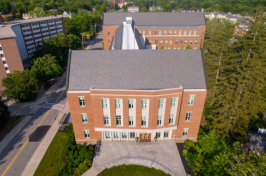
in Murkland Hall at the University of New Hampshire.
The lecture, “How the Environment Shapes Life, Sex, and Death,”
will be followed by a panel discussion and an audience question
and answer session. Davis will also sign copies of her book (available
for purchase in Murkland Hall) beginning at 6:30 p.m.
Davis’ book, which was designated a National Book Award Finalist
as one of the top five nonfiction books of 2002, examines the link
between environmental toxins and chronic diseases and reveals how
corporations have hidden pollution-induced epidemics from the public.
Publishers Weekly wrote of the book, “She sounds the warning
bell loud and clear: the threat to public health is real. This is
an enlightening, engrossing read….” And New Scientist
said, “In the tradition of Rachel Carson…epidemiologist
Devra Davis is a hero with a nose for trouble.”
Davis based the book in part on her own experience growing
up in the small, industrial town of Donora, Penn. The town, nestled
between ridges of the Allegheny Mountains some 25 miles south of
Pittsburgh and home to zinc and iron plants, experienced one of
the deadliest pollution episodes occur in the country.
In October 1948, a thick blanket of cold air trapped the hot fumes
belched from mills, furnaces, stoves and other sources. In the book,
Davis quotes a local attorney who made these observations about
a coal-burning engine that was idling on the railroad tracks. “It
issued a big blast of smoke that went up about six feet in the air
and stopped cold. It just hung there….” But the Donora
townsfolk were unperturbed by the pall and went about their routines;
the annual Halloween parade took place despite the fact that people
could not see their own feet as they trudged through town. A high-school
football game was held even though the head coach had to yell “Kick”
so the receiving players would know the ball was aloft, Davis reports.
Over a 12-hour period, 18 people died. Within days half the town
fell ill. And within a month some 70 people had died from the episode.
Members of Davis’ own family died from pollution-induced heart
problems. This personal experience helped launch a distinguished
career investigating the link between pollution and a litany of
human health effects, from breast cancer to male sterility, to birth
defects and asthma.
Davis is professor of epidemiology at the University of Pittsburgh
Graduate School of Public Health, and director of the Center for
Environmental Oncology at the University of Pittsburgh Cancer Institute.
Appointed to the Chemical Safety and Hazard Investigation Board
by President Bill Clinton in 1994, she has worked as senior advisor
to the Assistant Secretary for Health in the Department of Health
and Human Services.
Joining Davis in her UNH visit will be her husband, Richard Morgenstern,
a leader in quantifying the economic costs and benefits of environmental
regulation and policies. Morgenstern directed the Office of Policy
Analysis at the U.S. Environmental Protection Agency from 1983 to
1995, and served as an economic advisor to the State Department
during negotiations on the Kyoto Protocol. Morgenstern also
will give a lecture titled, “New Approaches on Energy and
the Environment: Policy Advice for the President” Thursday,
Feb. 10 from 4 to 5 p.m. in UNH’s James Hall. Morgenstern’s
lecture is based on his recent book of the same name, which was
recently published by Resources for the Future, a leading environmental,
economic, and energy policy institute where Morgenstern is a senior
fellow.
Both lectures are being funded by UNH’s Class of 1954 Academic
Enrichment Program and were organized by professors Erik Hobbie
and Cameron Wake of the Institute for the Study of Earth, Ocean,
and Space.
“We need more voices like that of Devra Davis, Wake
says. She has drawn from her own epidemiological
work, her personal experiences, and a wealth of scientific literature
to bring to light the significant effect of pollution on human health
and our ecosystem. It is particularly exciting to have
Davis speak at UNH, where we have taken a lead role among institutions
of higher learning in becoming a ‘climate protection campus,’
and where we are pursuing interdisciplinary research investigating
both the health and economic impacts of air pollution.”
Davis
& Morgenstern Lectures (pdf document)
|