


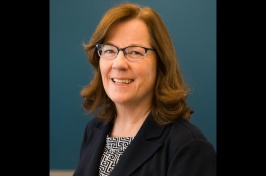





Marla Brettschneider, Associate Professor of Political Science and Women’s Studies, received a 2006-07 Center for International Education Faculty International Travel grant funded by the VPAA. She traveled recently to Israel to participate in World Pride, the second of such international GLBT Pride events, and to give three talks on her work related to multiracial, adoptive, queer, Jewish families.
Thank you for the opportunity to travel to Israel this summer to participate in World Pride- the 2nd of such international GLBT Pride events. The purpose of World Pride was to be in a city such as Jerusalem (the last was in Rome 6 years ago) to make a statement to religious and other world leaders that GLBT people and issues are on the map and must be reckoned with.
For Jerusalem this brought up a number of specific challenges.
1) One challenge was that, unlike Rome, religious leaders from across faith
communities tried to stop the event. Right wing activists threatened participants
at levels previously unseen. For example, there were posters circulating
in Jerusalem with instructions how to make a small home-made bomb to throw
into the crowd on the day of the public march.
There were also calls for a 20,000NIS (approximately $5,000) bounty for the head of any marcher killed. There were many events for the week of World Pride, but these threats were only directed at the public march.
2) This brings me to the next challenge: the War with Hizbollah.
The war itself was a horrible event. In relation to World Pride it meant that
Israeli Army reserves were called up for the ground invasion into Southern
Lebanon. Thus, the Jerusalem Police claimed that it could not provide the
proper police protection. The official march was postponed until a ceasefire.
Just before I left Israel (a few days into the ceasefire) I heard that there were meetings at the Jerusalem Open House (the World Pride Sponsoring organization) to reschedule the public march as reservists were returning to their regular post such as with municipal police units.
3) And third, holding the events in Jerusalem, or more precisely West Jerusalem, meant that due to the very reasons the international committee chose Jerusalem-- to make a mark about love across borders and the potential for the GLBT community to bring a message of peace to the Middle East as a site of terrible conflict--people from Palestine and many Arab countries could not attend. Needless to say, this was an intense and extremely important event and I was very grateful to be able to be a part of it
My role:.
While in Israel I gave three talks on my work related to multiracial, adoptive,
queer, Jewish families.
1) The first talk was for women from a cross section of feminist groups in
Haifa that also organized specifically for single mother families. I was asked
to talk about the “father space” and political, social, and legal
issues of families without a “father space.”
At one point the talk was, understandably, cancelled as Haifa was under intense attack. Many people were unreachable, living in bomb shelters or dispersed temporarily around the country in safer areas. And then I was informed that the talk would be held anyway- a little further south, below “the line” (the name of the general geographic line deemed beyond the reach of ketushas) and a few of the women would come down there for the talk.
To be honest, I was quite stunned. That day while rockets fell on Haifa and the roadways, a small group of feminist activists traveled with their children (they are single mothers, after all) to a kibbutz near Hadera (an area hit by Ketushas a few days later) to have this talk anyway. It went very well, and was extremely moving.
2) My next talk was in Tel Aviv at the main feminist activist space called “Beit Ha Feministy” (The Feminist House). Here I was asked to speak about queers choosing adoption and the challenges faced in this method of queer family formation.
It was an interesting group and discussion following my presentation (again not only as it was in the middle of the war) but because, of course, Israel’s related laws are different from those in the U.S., some more advanced and some less so on these issues. The comparative discussion especially for those in attendance trying to adopt themselves was very fruitful.
3) My final official talk occurred at the main, more academic event of World Pride in Jerusalem, entitled the MultiFaith Convocation. Most of the sessions for the Convocation were changed at the last minute due to cancellations because of the war. My panel was the only panel that remained in tact from its original conception by the conference planners.
This turned out to be quite special as my panel had taken time to work together and prepare before hand. And when it turned out that we all did go to Jerusalem, we also took the opportunity to meet in advance to discuss our views and the panel format.
I had been placed on a panel regarding same-sex marriage. My paper offered at critique. The other two presenters (whom I did not know in advance) were an out gay rabbi in England and an out gay Unitarian Minister from the U.S. Both had been involved in drafting the resolutions for their movements in favor of same-sex religious marriage ceremonies, new liturgy for such, and engagement as faith leaders in civil struggles for legalization. They were very gracious co-workers as my talk took exactly their kind of work to task. They had me present first so that the whole of the panel would be based in a critical context, and in the end we had an extremely mutually beneficial experience.
Other General Areas of Participation:
I also was able to participate in many events for my work, teaching, and research.
For example, I went with a delegation from World Pride organized through
Rabbis for Human Rights to an area of East Jerusalem that had suffered house
demolitions by the Israeli army, visiting homes that had been demolished,
partly rebuilt, and under current demolition orders.
I participated in the World Pride solidarity demonstration at the Barrier Wall which was set up to be shown live via internet to those in Palestine who could not come to World Pride events, getting past the Wall and checkpoints.
Within this multifaith program, I set aside one day to attend the annual conference of the International Organization of GLBT Jews- purposely chosen to occur with World Pride in Jerusalem. I participated in a number of events with a group of interfaith queer clergy organized to coincide with World Pride.
I was able to have numerous one-to-one and small group meetings with others in my fields, participate in various vigils and talk to numerous members of the press. (I do not know what of the interview I gave made it into public form, except one for the New York Times that in the end had deleted all references to World Pride!!)