




































|
Researcher
advocates for focus on how women deal with stress and trauma
By Erika Mantz, Media Relations
As recently as the 1970s, women's history was virtually ignored
in the K-12 curriculum. Now we celebrate Women’s History Month
across the nation. For years the exclusion of women in health research
resulted in a negative impact on their health. In 1991, the federal
government opened an office on Women’s Health. Now a UNH researcher
is looking to put the spotlight on women’s experiences of
stress and trauma.
There are significant differences in how men and women respond to
stressful and traumatic events, but until recently the study of
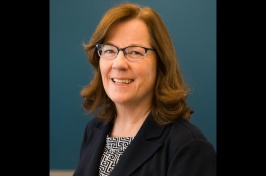
trauma was based almost solely on the experiences of men. Kathleen
Kendall-Tackett, a health psychologist at the University of New
Hampshire, begins to right that wrong in a new book she edited,
The Handbook of Women, Stress and Trauma. The book is part of a
stress and trauma series edited by noted trauma researcher Charles
Figley.
“Historically, the study of trauma has been based on the experiences
of men because traumatic stress was first recognized and extensively
studied among combat veterans,” Kendall-Tackett says. “From
the women’s health movement, we learned that women’s
health must be considered in the context of their lives, and the
same is true for stress and trauma. There are chapters in this book
that bring out information even people in the trauma field are going
to find new. It is appropriate that in the month we celebrate Women’s
History we increase our focus on women’s health.”
Kendall-Tackett is a research associate professor of psychology
in UNH’s Family Research Laboratory and a fellow of the American
Psychological Association. She is widely published in the fields
of family violence, maternal depression, perinatal health, and disability.
“It is becoming increasingly clear that men and women have
different sources of stress and trauma in their lives, and respond
to stressful and traumatic events differently,” Kendall-Tackett
says. “Some of those differences include that women’s
sources of stress are often relationally based, they have twice
the lifetime rate of depression compared to men, and they appear
more vulnerable to posttraumatic stress disorder after exposure
to traumatic events.”
Kendall-Tackett notes that the goal of the book is to bring together
the latest research on stress and trauma in the lives of women.
The book is divided into three sections. The first describes stress
and trauma in the lives of girls and teens, women in their 20s,
30s and 40s, and women in middle and old age. This section also
highlights the impact of perinatal events, such as miscarriage,
stillbirth and negative birth experiences, on women’s mental
health — it is the first mainstream trauma book to do so.
The second section describes the current research on violence against
women, including rape, intimate partner violence and elder abuse,
as well as cutting-edge research on the health effects of trauma
and the impact of childhood abuse on the developing brain.
The third delves into stress and trauma in the lives of three specific
populations of women: women of color, women with disabilities and
lesbian women.
|